Last Updated: June 24, 2026 | Originally Published: December 4, 2018
Heavy machinery transport is easier now than ever thanks to modern communication technology. It would be nice if you could email your shipment as effortlessly as you can the invoices, but Trans Global is prepared to do all the heavy lifting for you.
No matter the circumstances or how far away your customers are, it’s important to understand how to ship heavy machinery internationally to get the best results for both sides. Along with knowing the various methods typically used, you should know the proper procedures for preparing your shipment to travel overseas.
Following a guide to international heavy machinery transport is a helpful way to learn about the ins and outs of the transportation process. Here are a few essential facts to be aware of before you close your next sale to an international customer.
PREPARING YOUR EQUIPMENT FOR INTERNATIONAL HEAVY MACHINERY TRANSPORT

To prepare for heavy machinery transport, you need to take some necessary precautions. Failure to do so could be catastrophic. Without them, the risk for accidents, injuries, or even fatalities will increase sharply. These steps can ensure that each truck, crane, cargo ship, or plane will remain safe and secure during transit:
- Empty any fluids, especially fuel
- Make sure all loose parts and tools are secured
- Disconnect the batteries and alarm systems
- Read the owner’s manual for proper packaging techniques if it is to be packaged
- Cover any areas that would be exposed to the elements if it will be shipped via open-air services
- Guarantee there will be enough space around it for the transport company to retrieve it safely
INTERNATIONAL HEAVY MACHINERY SHIPPING OPTIONS
Once you’ve taken the required procedures to prepare your shipment, it’s time to consider the heavy machinery transportation options available to you. These will depend greatly on the items being shipped as well as how far they need to go. In some cases, a combination of these techniques may be required.
Here is a quick guide to the international heavy machinery shipping options available at Trans Global:
- Roll-on/roll-off (RoRo): This method involves simply driving the heavy machinery onto the transport ship and then off when it arrives. This only applies to anything that is self-propelled and features wheels or treads.
- Flat-rack: On the other hand, if the machinery cannot be driven onto the vessel on its own, it can be loaded onto a rack that can be stacked on top of others on the ship. However, because these racks have limited dimensions, it may be necessary to disassemble what is being shipped partially.
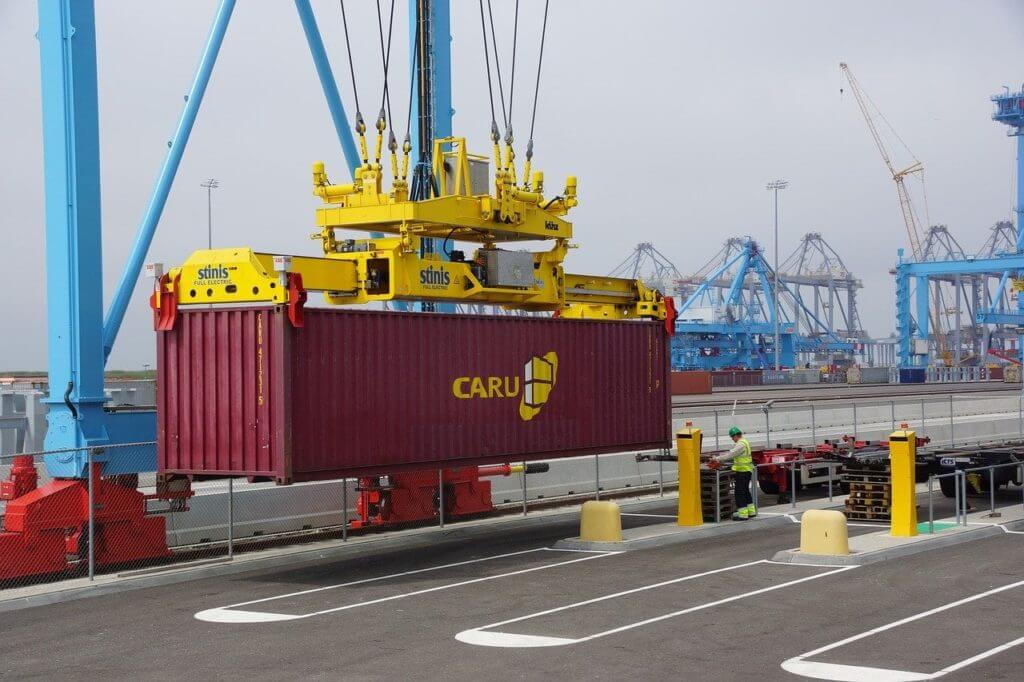
- Container: With this method of international heavy machinery transport, the equipment is loaded into an enclosed container in the same way as most goods being shipped overseas. The loaded containers are stacked onto the deck of the ship and carried to their destination, where they are unloaded with a crane.
LET US MAKE THE PROCESS EASIER FOR YOU
International heavy machinery transport can be a complicated process. Trans Global Auto Logistics has more experience shipping heavy equipment than just about anyone else in the industry. For further information or if you’d like to receive a quote, contact us today.
Aldo Flores
Founder & CEO, Trans Global Auto Logistics
Licensed NVOCC • FMC Regulated • 30+ Years in International Vehicle Logistics
Aldo Flores is the CEO of Trans Global Auto Logistics, a licensed NVOCC and FMC-regulated freight forwarder based in Arlington, Texas. With 23 years at TGAL and a lifetime in the family business, Aldo has overseen the shipping of more than 100,000 vehicles worldwide — from military PCS moves and classic cars to commercial fleet exports and boat shipments. TGAL was founded by his mother over 25 years ago, and under Aldo's leadership it has grown into one of the most trusted names in overseas vehicle transport.