Published: June 26, 2026
When a major shipping lane reopens, it feels logical that freight rates should fall right away. The ship can move. The route is available. The headlines calm down.
That is not how ocean freight pricing works.
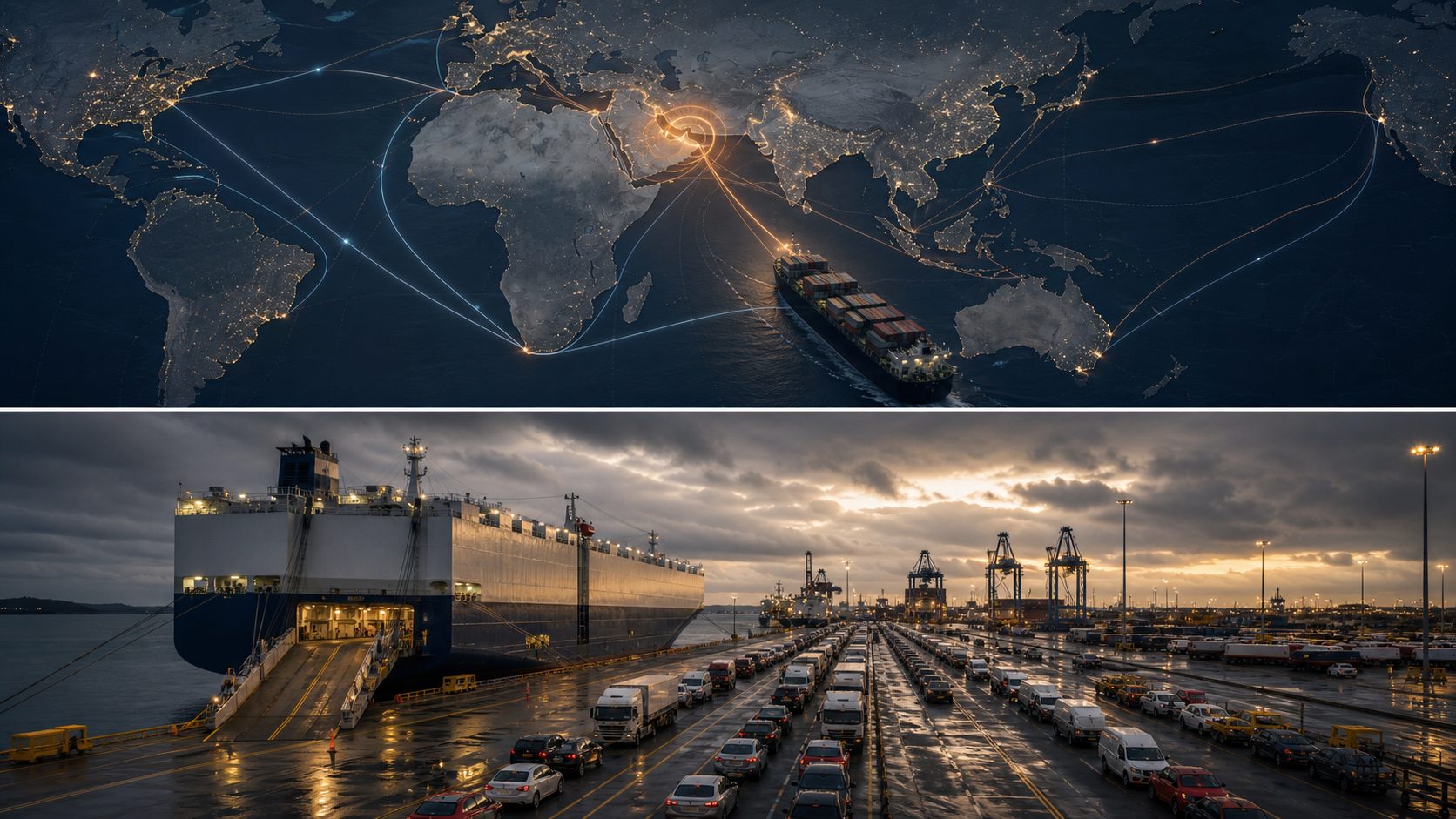
Even after the Strait of Hormuz reopens, rates can keep rising for days or weeks because the cost of moving cargo is tied to risk, equipment balance, vessel schedules, fuel, insurance, and carrier behavior. The physical route reopening is only one piece of the rate equation.
For vehicle shippers, military families, dealers, boat manufacturers, and equipment owners, that matters. A rate that was valid last week may not survive the next sailing. A booking that looked simple may suddenly include war-risk insurance, emergency surcharges, or delayed vessel space.
Here is why rates can stay high even after the immediate disruption ends.
1. Insurance does not reset overnight
War-risk insurance is one of the first costs to rise when carriers and insurers see danger near a major maritime chokepoint. It is also one of the last costs to come back down.
Insurers do not usually drop premiums the moment traffic resumes. They wait to see sustained stability. That means underwriters may still price Hormuz-connected moves as higher risk even after the route technically reopens.
For cargo owners, that risk pricing can show up as:
- War-risk premiums
- Carrier security surcharges
- Higher marine insurance costs
- Shorter quote validity windows
- More conservative booking terms
This is frustrating, but it is normal. Insurance markets hate uncertainty more than they hate bad news. Bad news can be priced. Uncertainty gets padded.
2. Carriers reposition vessels slowly
When a chokepoint becomes risky or blocked, carriers adjust. They may delay sailings, reroute vessels, skip ports, slow steam, or hold bookings until risk becomes clearer.
Once the route reopens, those vessels are not magically back where they belong. Some are late. Some are out of rotation. Some containers, chassis, and RoRo capacity are in the wrong places.
That creates a lag.
A reopened lane can still have tight capacity because the network around it is still catching up. Ocean shipping is not a light switch. It is more like a port terminal on a Friday afternoon: technically open, but everyone is still waiting for someone else to move first.
3. Emergency surcharges often outlive the emergency
Carriers may add surcharges quickly during disruption. Removing them is slower.
Once a surcharge is in place, carriers often wait for the next pricing cycle, vessel schedule reset, or formal advisory before pulling it back. If demand is strong, they may have little incentive to remove it immediately.
Common post-disruption charges can include:
- Emergency risk surcharges
- Peak season surcharges
- Bunker adjustment increases
- Port congestion fees
- Security-related fees
- Equipment imbalance charges
The label may change, but the result is the same: the all-in cost stays above the base ocean rate.
4. Schedule reliability takes a hit
A disruption does not need to stop every vessel to create real cost. It only has to make schedules less reliable.
When sailings slip, vehicle receiving dates move. Port cutoff dates change. Transshipment windows get tighter. Inland trucking and terminal appointments may need to be reworked.
That matters for vehicle shipping because timing is not just a convenience. It affects:
- Port storage exposure
- Vehicle drop-off windows
- Dealer delivery commitments
- Military PCS timelines
- Lienholder document timing
- Customs and export documentation
A rate can rise because the move now requires more coordination and more buffer, not just because the vessel costs more.
5. Fuel prices and bunker adjustments can move at the same time
Hormuz is closely tied to global energy markets. Even when traffic resumes, crude oil and fuel markets may stay jumpy.
Ocean carriers recover fuel cost through bunker adjustment factors. If fuel prices rise during the disruption, those increases can hit freight rates even after the route reopens.
That is why a shipper may hear, “Hormuz is open again,” and still see higher ocean costs on the next quote.
Both things can be true.
6. Peak season can amplify the problem
If a disruption overlaps with peak shipping periods, rates can climb faster and stay elevated longer.
Vehicle shippers see this during military PCS season, dealer inventory cycles, boat shipping schedules, and summer relocation demand. When space is already tight, a geopolitical shock gives carriers another reason to protect capacity and hold rates.
The route reopening removes one pressure point. It does not erase peak demand.
What shippers should do now
If you are shipping a vehicle, boat, trailer, or equipment overseas, the best move is not to wait for the headline rate to “settle.” The better move is to control the pieces you can control.
Before booking, confirm:
- Whether the quote includes all current surcharges
- How long the rate is valid
- Whether insurance costs changed
- The estimated sailing and cutoff dates
- Whether space is confirmed or still pending carrier acceptance
- What documents are needed before the vehicle can be received
For military PCS customers, do not assume the second vehicle will follow the same path as the government-authorized POV. Personally arranged shipments may have different timing, costs, ports, and documentation requirements.
Bottom line
Hormuz reopening helps. It does not instantly unwind risk pricing, vessel delays, equipment imbalance, fuel increases, or carrier surcharges.
If you need to ship a vehicle overseas, get a current rate and make sure it is an all-in rate, not a base number that grows teeth later.
TGAL helps military families, dealers, manufacturers, and individual shippers move vehicles overseas with clear documentation and current routing options. Request a quote before your port or sailing window tightens.
Aldo Flores
Founder & CEO, Trans Global Auto Logistics
Licensed NVOCC • FMC Regulated • 30+ Years in International Vehicle Logistics
Aldo Flores is the CEO of Trans Global Auto Logistics, a licensed NVOCC and FMC-regulated freight forwarder based in Arlington, Texas. With 23 years at TGAL and a lifetime in the family business, Aldo has overseen the shipping of more than 100,000 vehicles worldwide — from military PCS moves and classic cars to commercial fleet exports and boat shipments. TGAL was founded by his mother over 25 years ago, and under Aldo's leadership it has grown into one of the most trusted names in overseas vehicle transport.