

Published: October 22, 2026
Updated October 22, 2026
Please read before your vehicle ships
This guide explains arrival planning for Germany, the Netherlands, Belgium and Luxembourg. The military/DoD section applies only where you are eligible and the destination customs office confirms the procedure.
- Tell your TGAL coordinator when you will arrive in the destination country.
- Contact the assigned destination agent early and confirm the documents needed.
- Check where your booked delivery ends: port, customs house or home.
- Confirm the free-time deadline and possible storage charges before arrival.
No signature or return of this guide is required. Customs, registration and authorization forms may separately require your signature.
Also read the Shipping Checklist & FAQ for document copies and originals, vehicle preparation, payment and insurance.
1. Plan your arrival and contact the agent
Tell your coordinator your travel date and a telephone number and email where you can be reached after arrival. Contact the destination agent identified in your shipment email as soon as you arrive. If your vehicle arrives before you, or before the required paperwork is ready, release may be delayed and storage charges may accrue.
For shipments assigned to Trans Global Logistics Europe in Germany, the arrival contact is [email protected]. Include your TGAL reference, vehicle details and destination. Use the contact provided in your shipment email if another agent is assigned; do not send identity documents to an unconfirmed address.
2. Prepare the documents that apply to your move
The agent will provide a checklist for your circumstances. It may include identification, vehicle ownership documents, registration, purchase invoice, transport documents, customs authorization and evidence supporting any claimed relief. Send readable copies first and follow the instructions for originals. A newly purchased vehicle may require the manufacturer’s certificate of origin and bill of sale as well as identification.
Customs treatment depends on your status, vehicle history and destination. Do not assume that a military or DoD affiliation automatically makes every shipment free of duty or tax. Obtain confirmation from the responsible customs office or agent before relying on an exemption.
U.S. military and DoD moves to Germany
Contact your local U.S. Forces customs and vehicle-registration offices before starting the clearance process. The agent may request your military/DoD identification and the customs and registration forms appropriate to your move, including AE Form 550-175A and AE Form 190-1AA where applicable.
Wait for the agent’s timing instructions before obtaining time-sensitive paperwork. Forms can have limited validity; obtaining them too early may mean having to replace them. Ask the issuing office to confirm the current form, signature requirements and validity period. Send the completed paperwork promptly when instructed.
Current official guidance is available from U.S. Army Europe and Africa Customs. Requirements in Belgium, the Netherlands and Luxembourg can differ from Germany; confirm locally rather than using German forms by default.
3. Check the vehicle’s air-conditioning refrigerant
Before shipping an older vehicle to the EU, especially a pre-1994 model, have the air-conditioning refrigerant identified. Keep a clear photograph of the refrigerant label and any professional conversion or treatment records.
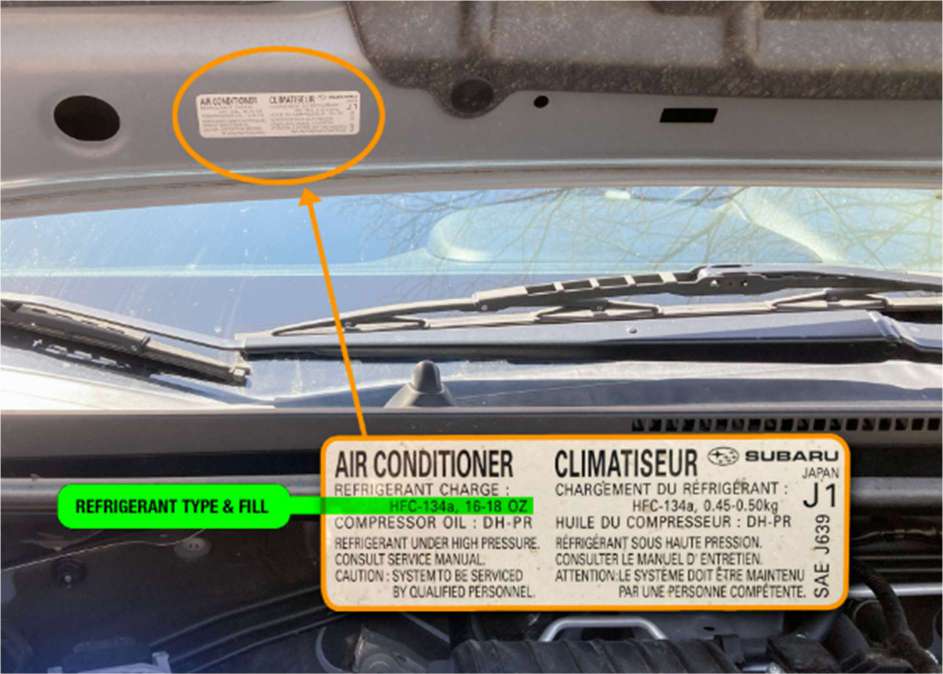
What to send: Take a clear photo of your vehicle’s full refrigerant label so the destination agent can read the refrigerant type and other details. Send that photo with your shipment reference. If you cannot find the label or it is unreadable, tell your coordinator; do not guess the refrigerant type from the vehicle’s age or this example. This example does not by itself confirm that your vehicle meets import requirements.
If the system uses R12 or another restricted ozone-depleting substance, contact your coordinator before pickup. The destination agent must confirm what professional treatment and evidence are required. Do not assume that draining the system alone makes it acceptable. Noncompliance can lead to refusal, delay and extra costs.
See the European Commission’s ozone-layer guidance and EU Regulation 2024/590 on ozone-depleting substances.
4. Understand port free time and storage
Before arrival, ask the destination agent for the exact last free day, the applicable storage rate and what must be completed to release the vehicle. Free time and rates vary by terminal, carrier and booking; do not rely on an older guide’s example of a fixed number of free days or a daily dollar amount.
Arrange your documents, availability and any required payment early. Customs delays, missing documents, arriving after your vehicle or waiting for inland transport may use up free time. Your written quote determines which destination services are included; storage, inspections, duties, taxes or additional handling may be extra.
5. Know where your inland delivery ends
For a qualifying military/DoD move transported under a transit bond, such as a T1, the vehicle may travel from the arrival port to the designated customs house for final clearance. The customer generally needs to attend with the required documents. The agent will confirm the appointment, location and who must be present.
A customs-house delivery is not a home delivery. If your booking ends at the customs house, arrange onward transportation separately with the agent and confirm any additional cost. Do not assume a “door” service description overrides the customs procedure or the delivery endpoint specified in your quote.
If your booking ends at the port, wait for release and collection instructions before travelling there. If home delivery is included, confirm how customs clearance and the final delivery appointment will be handled.
6. Allow flexibility for inland transport
Inland trucking depends on customs release, vehicle availability, carrier capacity and routing. Collection or delivery may not follow immediately after vessel arrival. Ask the agent for the current estimate for your shipment and avoid making fixed onward travel plans based only on the vessel’s ETA.
Tell the agent about restricted access, a change of address or telephone number, or dates when you cannot attend. An unexpected change can require new arrangements and additional charges.
7. Collect the vehicle and your originals
Bring the identification and documents specified in your collection instructions. Inspect the vehicle, photograph its condition and record any visible exceptions on the handover paperwork before signing. Notify your coordinator and the agent promptly about a problem and follow any applicable claim-reporting instructions.
Original titles travel separately from the vehicle. For shipments handled by our Germany agent, the originals are sent to that agent for return after you receive the vehicle. Confirm the return arrangements with the agent and retain copies of your shipping and customs records.
Questions before shipping?
Reply to your assigned TGAL coordinator with your shipment reference. Ask about anything you cannot complete before pickup or arrival. This guide is preparation information; the responsible customs office, your shipment instructions and your written booking determine the procedure for your move.
You can print this page or save it as a PDF from your browser for reference.