Last Updated: July 10, 2026 | Originally Published: July 9, 2026
Updated July 9, 2026
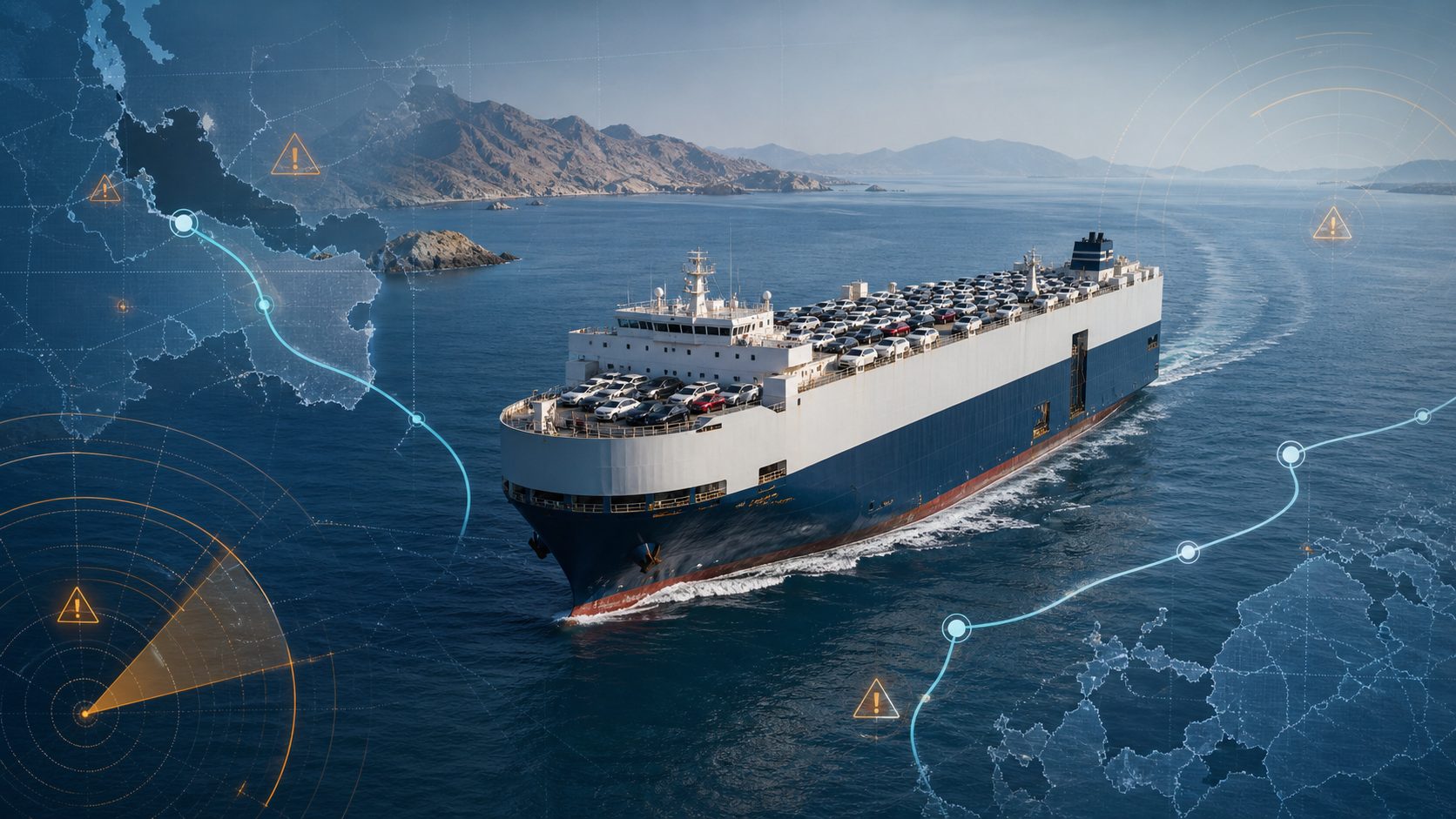
The Strait of Hormuz is back in the shipping headlines, and for anyone moving a vehicle internationally this summer, the practical takeaway is simple: some routes may still move, but customers should expect more uncertainty than normal.
That does not mean every vehicle shipment is delayed. It does mean ocean carriers, RoRo operators, container lines, insurers, port agents, and inland carriers are all watching the same risk map. When risk changes quickly, bookings, rates, insurance terms, sailing schedules, and ETAs can change with it.
For military PCS families and individual shippers, this is the time to plan early, keep documents ready, and avoid building travel plans around a single promised arrival date.
Why Hormuz matters
The Strait of Hormuz connects the Persian Gulf with the Gulf of Oman and the Arabian Sea. It is one of the world’s most sensitive maritime chokepoints. The U.S. Energy Information Administration reported that oil flows through the strait averaged about 20 million barrels per day in 2024, roughly 20% of global petroleum liquids consumption.
That energy role matters to vehicle shipping even when your car is not moving on an oil tanker. When a chokepoint affects fuel, insurance, vessel deployment, port calls, and regional risk controls, those costs and delays can spread across other cargo markets.
What is happening in July 2026
Current reporting points to a renewed risk environment around the strait. Reuters reporting published by Al-Monitor on July 9 said oil tanker traffic through Hormuz was near a standstill after renewed U.S.-Iran fighting and vessel attacks. The same report cited Kpler analysis showing only two tanker transits in the early hours of July 9, compared with pre-conflict daily traffic of roughly 125 to 140 sailings across all vessel types.
Insurance Journal, also citing shipping and insurance industry sources, reported on July 8 that some war-risk underwriters had advised shipowners to pause Hormuz voyages while others reviewed policy terms after renewed vessel attacks. The article said war-risk insurance for ships inside the Gulf had moved toward 3% of vessel value from 2% at the end of the prior week, with one underwriting source suggesting coverage might still be available but at much higher pricing.
The International Maritime Organization also warned that sailings through Hormuz should be avoided as long as crew safety and security cannot be assured, according to that same report.
The IMO also says it is monitoring more than 20,000 seafarers in the region and that its safe evacuation framework is currently paused. Inchcape Shipping Services’ July 8 Middle East operational update said UAE ports were broadly open, but Fujairah and Khor Fakkan had minimum four-week berthing waits for breakbulk, bulk, general cargo, and Ro-Ro vessels because of increased cargo calls and rerouting.
The bottom line: the strait is not a normal operating environment right now.
Which vehicle shipments are most exposed?
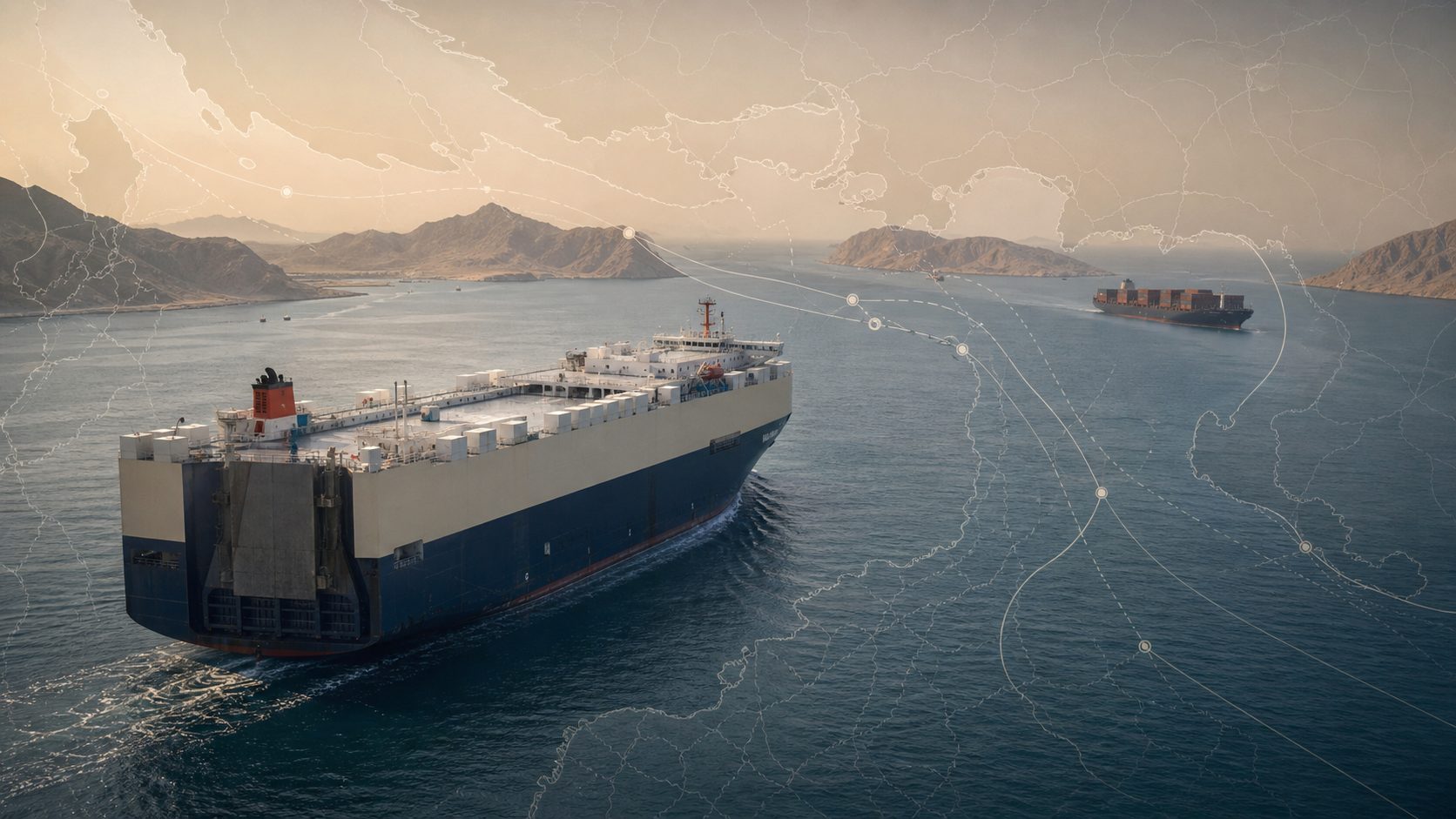
Most TGAL vehicle shipments do not physically transit the Strait of Hormuz. A PCS vehicle moving between the U.S. and Europe, for example, usually has different routing exposure than cargo moving into the Persian Gulf.
The higher-risk lanes are generally shipments connected to:
- Persian Gulf destinations or origins
- Middle East ports that rely on routing through or near Hormuz
- South Asia or Indian Ocean routings affected by vessel redeployment, port omissions, or carrier schedule changes
- Containerized vehicle shipments routed through transshipment hubs that may be adjusted by carriers
- Ro-Ro shipments calling congested regional ports, including ports dealing with rerouted cargo
- High-value, specialty, oversized, or non-running vehicles where rebooking is harder
Even when the vehicle is not bound for the Gulf, the market impact can still show up indirectly. Carriers may reposition vessels, blank sailings, change port rotations, add risk surcharges, or give priority to cargo already in the booking pipeline.
Possible effects on vehicle shipping
1. Schedule changes and rolled bookings
Carriers may change sailings with limited notice. A vessel that was expected to call one port may skip it, delay arrival, or change rotation. A booking can also be rolled to a later sailing if the carrier reduces capacity or pauses a route.
For PCS families, that means the key planning number is not just the published sailing date. It is the confirmed booking, port cut-off, vessel departure, transshipment plan if any, and latest carrier update.
2. More ETA uncertainty
ETAs are estimates, not guarantees. In a normal market, that is already true. Around a security event, it becomes even more important.
A vehicle can be delayed by:
- Carrier security restrictions
- Port congestion after vessel bunching
- Customs or documentation holds
- Transshipment delays
- Inland carrier availability after the vehicle arrives
- Insurance or war-risk approval changes before sailing
TGAL will give customers the best available ETA based on carrier and port information, but we will not promise an arrival date that the ocean carrier itself cannot guarantee.
3. Insurance and surcharge pressure
War-risk premiums, emergency surcharges, fuel volatility, and route changes can raise shipping costs. These charges may not appear at the same time across every carrier or lane. Some may apply only to specific ports, vessel routes, or cargo types.
Customers should ask before booking whether the quoted price includes known surcharges and whether any charges are subject to carrier confirmation. If a carrier adds a surcharge after the quote but before the shipment is accepted or sailed, the customer may need to approve the revised cost before TGAL can proceed.
4. More conservative carrier acceptance
When risk is high, carriers may become more selective. They may pause certain cargo, reject bookings near affected areas, require earlier documentation, or limit last-minute changes.
This is especially important for individual shippers moving vehicles that need special handling: non-running units, oversized vehicles, motorcycles with loose parts, RVs, trailers, modified vehicles, or vehicles with title or lienholder complications.
What customers should do before booking
If you are planning an international vehicle shipment in July 2026, do these before you lock in travel plans:
- Book earlier than usual. Give the shipment room for carrier changes, documentation review, and port cut-offs.
- Confirm the exact origin, destination, and port routing. A country name is not enough. The port matters.
- Ask whether the route has Hormuz, Gulf, Middle East, or South Asia exposure. If it does, expect more schedule and price movement.
- Have documents ready before the vehicle is picked up. Title, lienholder authorization if needed, POA, passport or orders for PCS moves, and any destination-specific forms should be handled early.
- Avoid packing personal items unless the carrier and destination rules allow it. Personal property can create holds or rejections.
- Build a buffer into your arrival plan. Do not schedule flights, lodging, base reporting logistics, or vehicle-dependent plans around the earliest possible ETA.
- Ask what is firm and what is still subject to carrier confirmation. A good quote should make that clear.
What TGAL can promise
TGAL can promise clear communication, careful routing review, document guidance, and honest updates when carriers change schedules or costs.
TGAL can also help explain whether a shipment has direct or indirect exposure to current Middle East shipping risk, and we can work with carriers and agents to identify the best available option for the vehicle and destination.
What TGAL cannot promise
TGAL cannot promise that a vessel will sail on a specific date, that a carrier will hold a published ETA, or that a surcharge will not change if the carrier or insurer changes terms.
We also cannot promise that a shipment routed near a high-risk area will move on the original schedule if the carrier pauses service, changes port rotations, or receives new security guidance.
That is not fine print. That is the reality of ocean shipping when a major chokepoint is unstable. Better to know it before the vehicle is already sitting at port with everyone pretending the schedule is carved into steel. It is not. It is usually carved into a PDF that gets revised at 4:47 p.m.
The practical takeaway
If your vehicle shipment has Middle East, Gulf, or South Asia exposure, plan for extra time and possible cost changes. If your shipment does not touch those routes, the risk may be indirect, but it can still affect carrier capacity and global ocean freight pricing.
The safest move is to start early, keep paperwork clean, ask route-specific questions, and treat ETAs as planning estimates until the vehicle has actually sailed and cleared the next milestone.
TGAL helps military PCS families and individual shippers move vehicles internationally with realistic planning and direct communication. If you are unsure whether your route is exposed to current Hormuz-related disruption, contact TGAL before booking so we can review the lane and explain the current carrier position.
Sources reviewed
- International Maritime Organization: Shipping and seafarer information — Strait of Hormuz and the Middle East
- Inchcape Shipping Services, July 8, 2026: Middle East Operational Status
- IMF PortWatch: Trade Disruptions in the Strait of Hormuz
- U.S. Energy Information Administration: Amid regional conflict, the Strait of Hormuz remains critical oil chokepoint
- Al-Monitor / Reuters, July 9, 2026: Oil tanker traffic through Hormuz at near standstill as attacks strain Iran truce
- Insurance Journal / Reuters, July 8, 2026: Some War Insurers Advise Shipowners to Pause Hormuz Voyages After Attacks
Aldo Flores
Founder & CEO, Trans Global Auto Logistics
Licensed NVOCC • FMC Regulated • 30+ Years in International Vehicle Logistics
Aldo Flores is the CEO of Trans Global Auto Logistics, a licensed NVOCC and FMC-regulated freight forwarder based in Arlington, Texas. With 23 years at TGAL and a lifetime in the family business, Aldo has overseen the shipping of more than 100,000 vehicles worldwide — from military PCS moves and classic cars to commercial fleet exports and boat shipments. TGAL was founded by his mother over 25 years ago, and under Aldo's leadership it has grown into one of the most trusted names in overseas vehicle transport.