Last Updated: June 24, 2026 | Originally Published: March 7, 2026
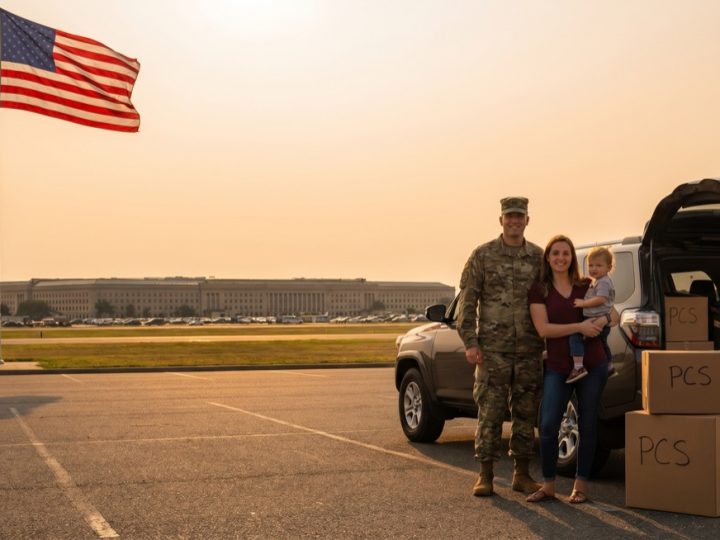
If you’re planning to ship a vehicle overseas this year — whether you’re a military service member PCSing to Germany or Japan, or a commercial buyer moving units internationally — you need to understand what’s happening to RoRo capacity in 2026. Because the market is tight, and it’s not loosening up anytime soon.
Here’s what’s driving it, what it means for your shipment, and what you can do about it.
What Is RoRo Shipping?
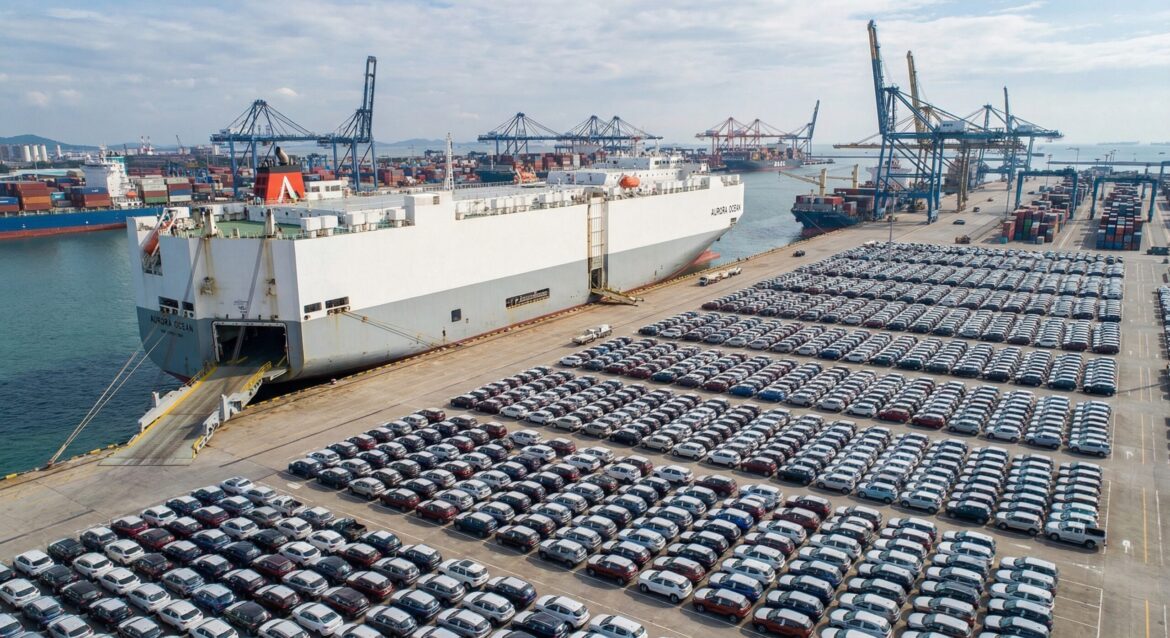
RoRo stands for Roll-on/Roll-off. These are specialized vessels where vehicles — cars, trucks, SUVs, boats on trailers, construction equipment — are driven or rolled directly onto the ship and secured for ocean transit. No crane, no container. For most personal and commercial vehicle shipments, RoRo is the standard method. It’s efficient and cost-effective when space is available. Right now, space is the problem.
Why Capacity Is Getting Squeezed
Three things are hitting simultaneously, and together they’ve created a market that favors carriers, not shippers.
Asian automakers are eating the fleet
BYD — China’s largest EV manufacturer — now operates more than six dedicated car carriers. Other Asian automakers are following the same playbook. These vessels aren’t available to the open market. They’re moving the manufacturers’ own inventory from factories to destination ports. That’s hundreds of thousands of vehicle-equivalent units (CEUs) of capacity that’s been effectively removed from the market every year.
This matters because the traditional car carrier fleet — operated by companies like Hoegh, WWL, and K-Line — was already running near capacity before BYD and its competitors started building out their private fleets. The commercial shipping industry didn’t add tonnage fast enough to compensate.
New fire safety rules just took effect
Starting in 2026, updated fire protection regulations apply to RoRo vessels carrying electric vehicles. EVs present a unique fire risk — lithium-ion battery fires burn differently than conventional engine fires and are much harder to suppress. The new rules require upgraded fire suppression systems, improved ventilation, and in some cases, restricted deck placement for EVs.
Compliance costs money. Some older vessels that weren’t worth retrofitting have been quietly removed from certain trade lanes. Others now carry fewer vehicles per voyage because of spacing and safety zone requirements for EV cargo. Less cargo per ship, on the same trade lane, means less capacity for everyone else.
The fleet isn’t getting younger
The global RoRo fleet has been aging for years. New vessel orders have been placed, but shipyard backlogs are long — typically three to five years from order to delivery. The vessels ordered during the post-pandemic demand surge aren’t all in the water yet. In the meantime, older tonnage is being retired or redeployed, and the replacement pipeline hasn’t caught up.
What This Means If You’re Shipping a Vehicle Overseas
You need more lead time than before
The days of booking a car carrier 30 days out and getting your preferred vessel are mostly gone on high-demand trade lanes. Sixty to ninety days is more realistic, particularly for military corridor routes like Baltimore to Bremerhaven or San Diego to Yokohama. If you’re booking for summer, that lead time requirement stretches further.
Rates are under upward pressure
When supply is tight and demand stays strong, prices move. That’s not a prediction — it’s already happening on several trade lanes. Military shippers operating under government contracts may have some rate protection, but commercial shippers and anyone booking spot freight should expect the market to reflect the capacity shortage.
Space priority goes to volume relationships
Carriers allocate space, and they do it based on relationships and contract commitments. If you’re booking through a carrier directly as a one-off shipper, you’re competing for whatever’s left after their committed customers are served. Working with an NVOCC — a Non-Vessel Operating Common Carrier, essentially a freight intermediary that holds block space agreements with carriers — gives you access to allocated space that wouldn’t be available to you directly.
What You Should Do Now
Book early — especially if you’re PCSing this summer
Summer is peak PCS season. Military families across all branches are receiving orders and trying to ship vehicles in the same short window. That concentrated demand hits an already-tight market. If you have orders in hand or expect them soon, start the booking process now — not when you’re 30 days from your report date.
Work with an NVOCC that has actual carrier relationships
There’s a difference between a freight broker who can send an email and an NVOCC with negotiated space allocations on vessels operated by Hoegh, WWL, and K-Line. Ask directly: do you have allocation agreements with the carriers? What happens if the vessel is full — do you have options, or do I wait? The answer tells you a lot.
Get your documents ready before you need them
Title, registration, proof of insurance, valid government ID — these aren’t complicated, but they take time to gather and any missing document can push your cargo off a sailing. If you’re shipping a newer vehicle, confirm the odometer reading requirement. If you’re importing, understand the destination country’s customs requirements before your vehicle hits the water, not after.
How TGAL Navigates This for Our Customers
TGAL has been shipping vehicles overseas for decades. Our allocation agreements with Hoegh, WWL, and K-Line give our customers access to reserved space that doesn’t disappear when the market gets tight. That matters most in summer, and it matters more every year as fleet capacity stays constrained.
We’re not going to promise that 2026 is easy — it isn’t. But we can tell you that working with an NVOCC that has the right carrier relationships makes a real difference in whether your vehicle ships on time.
Ready to Book?
If you have a vehicle to ship overseas and you want to lock in space before summer capacity tightens further, get in touch. We’ll tell you exactly what the market looks like on your specific trade lane and what the realistic timeline is for your shipment.
Get a Quote at tgal.us or call us directly. The earlier you start, the more options you have.
Aldo Flores
Founder & CEO, Trans Global Auto Logistics
Licensed NVOCC • FMC Regulated • 30+ Years in International Vehicle Logistics
Aldo Flores is the CEO of Trans Global Auto Logistics, a licensed NVOCC and FMC-regulated freight forwarder based in Arlington, Texas. With 23 years at TGAL and a lifetime in the family business, Aldo has overseen the shipping of more than 100,000 vehicles worldwide — from military PCS moves and classic cars to commercial fleet exports and boat shipments. TGAL was founded by his mother over 25 years ago, and under Aldo's leadership it has grown into one of the most trusted names in overseas vehicle transport.