Last Updated: June 24, 2026 | Originally Published: March 10, 2026
What’s Happening at the Strait of Hormuz
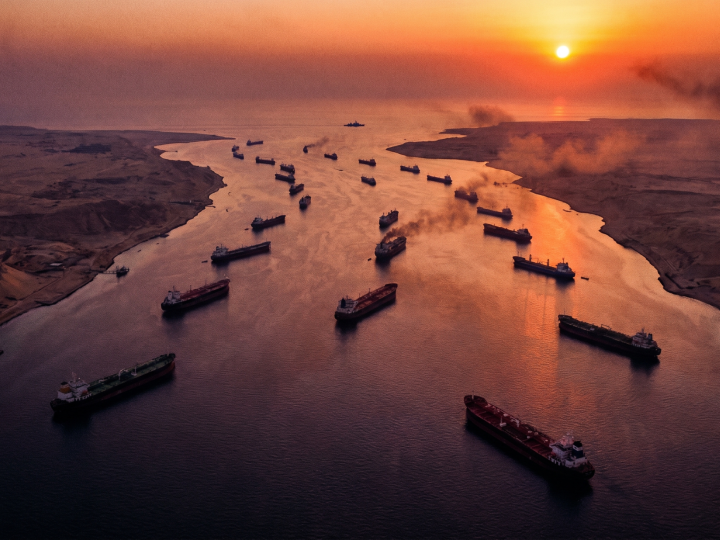
On February 28, 2026, military conflict in the Middle East shut down commercial traffic through the Strait of Hormuz. The strait handles roughly 20% of global oil and LNG by volume — and a meaningful share of vehicle carrier traffic moving between Asia, the Gulf, and European ports.
The numbers came fast. Container diversions jumped 360% in under two weeks. MSC announced it was pulling its Gulf services and added $800 emergency surcharges on affected lanes. More than 270,000 TEU are currently stranded with no viable alternate routes. War-risk insurance premiums, already elevated after the Red Sea disruptions of 2024, went up again overnight.
There’s no clean alternate. The Suez Canal routes have been under pressure since the Houthi attacks began in late 2023. Rerouting around the Cape of Good Hope adds 10–14 days per voyage and burns significantly more fuel. For vehicle carriers — which are already capacity-constrained compared to container shipping — there’s no slack in the system to absorb that kind of disruption quietly.
This isn’t a rumor or a projection. It’s happening now. And it directly affects international vehicle shipments across every trade lane.
How the Hormuz Crisis Hits Vehicle Shipping
Vehicle shipping operates differently from container shipping. Most international vehicle transport runs on RoRo vessels — Roll-on/Roll-off ships where cars drive on and off under their own power. These vessels have fixed sailing schedules, fixed port calls, and limited capacity. They’re not interchangeable with container ships, and they can’t easily reroute the way a box ship can.
When conflict disrupts the Gulf lanes, RoRo operators face a choice: absorb the cost, reroute and extend transit times, or both. They’re doing both.
Fuel costs: Diesel hit $3.68 per gallon on February 2. By March 2 it was $3.90. As of this week, regional diesel prices are running $4.40 and higher in some markets. That’s a 19.6% increase in five weeks. Ship operators pass fuel costs through to NVOCCs. NVOCCs pass them to shippers. The math is simple and unavoidable.
Carrier schedule disruptions: Hoegh Autoliners, Wallenius Wilhelmsen (WWL), and K-Line — three of the largest RoRo operators — are all actively managing rerouting decisions. Schedules that were firm two weeks ago are now subject to change. A sailing that was booked for a Gulf port may shift to an alternate port or see a week added to transit time with little notice.
War-risk insurance: War-risk coverage is mandatory for vessels transiting conflict zones. Insurers have repriced rapidly. These costs flow into operating expenses for carriers, which in turn flow into surcharges. You’ll see these on rate quotes as BAF (bunker adjustment factors), war-risk surcharges, and emergency rate adjustments.
For shippers who booked 60 or 90 days out expecting stable rates, this is a problem. For shippers booking now, you’re pricing into the current environment — which is at least predictable.
What Dealers, Manufacturers, and Commercial Shippers Should Expect
If you’re moving vehicles, boats, or travel trailers internationally, the Hormuz disruption is already affecting your supply chain — even if your cargo isn’t routing through the Gulf.
New Car Dealers and OEM Distributors
International new vehicle deliveries run on tight schedules. Dealers have floor plan commitments, customer delivery dates, and inventory targets. When carrier schedules shift and transit times extend, the downstream effect is real: delayed lot arrivals, missed sales windows, and carrying costs on vehicles that should already be on the showroom floor. Expect rate increases in the 15–25% range on affected lanes and build 2–3 weeks of buffer into delivery commitments.
Boat Dealers and Marine Manufacturers
TGAL ships new vessels from US manufacturers to international dealers. These are high-value, oversized shipments that rely on RoRo and flat rack capacity. When carriers reroute or reduce sailings, boat shipments get squeezed because they take more deck space per unit. If you have dealer deliveries scheduled for Q2 or Q3, lock in your booking now.
Travel Trailer and RV Manufacturers
Travel trailers and motorhomes moving internationally face the same capacity pressure — they’re oversized cargo on vessels already running tight. Fuel surcharges hit these shipments harder because the transport cost per unit is higher. Get current quotes and confirm space before the rate environment shifts again.
Freight Forwarders and Agents
For freight forwarders routing vehicle cargo through Gulf ports, the Gulf of Oman corridor is compromised. Port Rashid and Zayed Port sailings are seeing schedule volatility. Alternate options through Jebel Ali exist but are volume-constrained. Lock in forward bookings now and build buffer into delivery commitments. Contract rates with allocation agreements provide some insulation — spot shippers are fully exposed.
What TGAL Is Doing About It
We’re not waiting for this to sort itself out.
Fuel surcharge: Effective March 10, 2026, TGAL has implemented an 8% fuel surcharge across applicable shipments. We don’t enjoy doing this. But diesel at $4.40+ makes the math unavoidable, and we’d rather be transparent about it upfront than hide it in vague “market adjustments” after you’ve booked. The surcharge is documented, visible on your quote, and tied directly to fuel price benchmarks.
Carrier monitoring: Our team is in daily contact with Hoegh, WWL, and K-Line. We have allocation agreements with all three, which means we have real visibility into their sailing schedules — not just what’s posted on a website. When a schedule changes, we know before most shippers do, and we’re reaching out to affected customers proactively.
Route intelligence: For shipments moving through or near the Gulf, we’re evaluating case by case whether alternate routing makes sense — different load port, different carrier, adjusted transit window. There’s no universal answer. A vehicle going to Kuwait City has very different options than one going to Jeddah or Fujairah. We’re making those calls with current information, not with assumptions built before February 28.
Customer communication: We’re not in the business of sending form letters. If your shipment is affected, your coordinator is reaching out to you directly. If you haven’t heard from us and you’re worried, call.
The Hormuz situation is serious and it’s not going to resolve in a week. But shippers who planned ahead, locked in allocations, and work with an NVOCC that has real carrier relationships are in a meaningfully better position than those who don’t.
Book Now — Don’t Wait
Dealer inventory doesn’t wait for geopolitics to settle. Boat orders don’t pause. Travel trailer shipments have delivery dates. The question is whether you’re booking now, with current rates and current information, or waiting until capacity is tighter and rates are higher.
Contact your TGAL coordinator or visit tgal.us to get a current quote and check availability on your route. If you don’t have a coordinator yet, reach out through the website — someone will be in touch same day.
The market is moving fast. Your booking should too.
Aldo Flores
Founder & CEO, Trans Global Auto Logistics
Licensed NVOCC • FMC Regulated • 30+ Years in International Vehicle Logistics
Aldo Flores is the CEO of Trans Global Auto Logistics, a licensed NVOCC and FMC-regulated freight forwarder based in Arlington, Texas. With 23 years at TGAL and a lifetime in the family business, Aldo has overseen the shipping of more than 100,000 vehicles worldwide — from military PCS moves and classic cars to commercial fleet exports and boat shipments. TGAL was founded by his mother over 25 years ago, and under Aldo's leadership it has grown into one of the most trusted names in overseas vehicle transport.