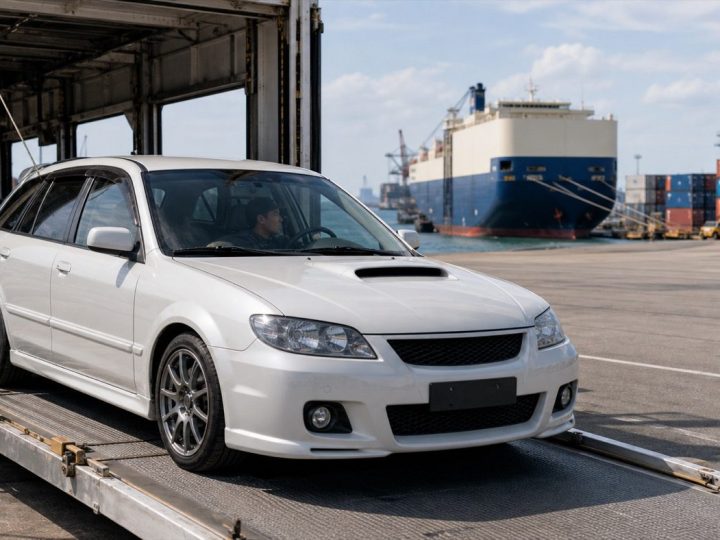
Published: July 30, 2026
Shipping a vehicle to Japan is not just a vessel booking. Japan has two very different paths depending on who owns the vehicle and why it is entering the country.
For U.S. military service members on PCS orders, the process usually runs through the SOFA/USFJ system, installation vehicle registration, Japanese Compulsory Insurance, road tax, and base licensing requirements. For private importers, the process runs through Japan Customs, the Land Transport Authority, vehicle inspection, Japanese registration, and local tax/insurance steps.
The short version: a vehicle can often be imported into Japan, but the paperwork path has to be sorted before the sailing is booked. The usual delay points are title/VIN mismatches, missing customs clearance certificate details, unclear temporary vs. permanent import status, inspection readiness, JCI/insurance, road tax, parking certificate timing, and assuming the PCS path and private-import path are interchangeable. They are not.
Quick answer: can you import and register a U.S. vehicle in Japan?
Usually, yes, but the path depends on the owner’s status.
- U.S. military PCS path: SOFA-status personnel generally work through the destination installation’s transportation office, VPC process, Pass and Registration or vehicle registration office, USFJ driving permit requirements, Japanese Compulsory Insurance, road tax, and local vehicle registration requirements. Privately owned vehicles still need Japanese number plates, and installation rules control who can register, insure, operate, sell, or dispose of the vehicle.
- Private importer path: Private importers file an import declaration with Japan Customs, obtain the vehicle customs clearance certificate needed for registration, then complete Japanese inspection and registration through the Land Transport Authority before driving on public roads.
- Temporary visitor path: Visitors temporarily bringing a private vehicle may use Carnet de Passages en Douane (CPD) procedures where eligible. Japan Customs says the carnet is generally valid for one year, creates a duty-free temporary admission process, and requires the vehicle to be taken back out of the country.
Do not treat the port release as the finish line. In Japan, the finish line is customs cleared, inspected, insured, taxed, registered, plated, and legal for the owner’s status. A tidy little parade of acronyms, because apparently RoRo was too simple.
Path 1: U.S. military service members on PCS orders to Japan
For PCS families headed to Japan, start with the destination base process. Japan has major U.S. installations around Yokosuka, Yokota, Misawa, Sasebo, Iwakuni, Camp Zama, Okinawa, and other locations, and each installation can have local procedures layered on top of USFJ-wide rules.
The U.S.-Japan SOFA is the legal backdrop. Japan’s Ministry of Foreign Affairs publishes the agreement and states that privately owned vehicles of U.S. forces members, civilian component members, and dependents carry Japanese number plates acquired under the same conditions as Japanese nationals. Base-level guidance then controls practical registration, licensing, insurance, road tax, and disposal requirements.
For PCS moves, confirm these items before shipping:
- Whether the vehicle is authorized under the service member’s orders and destination command policy
- Whether the VPC accepts the vehicle for shipment to that Japan destination
- Whether the sponsor, spouse, or agent can receive/register the vehicle
- Whether a power of attorney is needed
- Whether the member has or can obtain the required USFJ driver permit, often referred to as USFJ Form 4EJ in base materials
- What Japanese Compulsory Insurance, additional liability insurance, JCI/inspection, road tax, and parking or storage rules apply
- Whether there are limits on number of vehicles, motorcycles, mini vehicles, or trailers
- What happens if the vehicle is sold, transferred, junked, exported, or left behind at PCS-out
PCS customs and tax treatment
SOFA status can create customs/tax treatment that differs from a normal private import, but service members should not assume every vehicle enters tax-free or restriction-free. Confirm current treatment with the destination transportation office, legal/customs office, vehicle registration office, and VPC.
The practical difference is this: PCS personnel normally operate inside a controlled host-nation/base system. Private importers operate directly through Japan Customs and civilian registration channels. A vehicle imported under PCS/SOFA status may have restrictions on transfer, sale, deregistration, or export that would not be the same as a standard private permanent import.
Before the vehicle ships, ask the base these questions:
- Will this vehicle enter under SOFA/military status, normal customs import, or another category?
- Is there a customs exemption, and if so, what are the limits?
- Are road tax and JCI due immediately after arrival?
- Can the vehicle be driven before final registration, or only moved by approved means?
- Does the vehicle need an inspection before plates are issued?
- Are there separate rules for oversized vehicles, motorcycles, modified vehicles, trailers, or vehicles with outstanding liens?
PCS documents to gather before shipping
Service members should gather:
- PCS orders and amendments
- DoD ID/sponsor information
- Vehicle title or ownership document
- Lienholder export authorization, if financed
- Current registration
- VPC/shipping documents
- Power of attorney if a spouse or agent will handle pickup/registration
- Driver’s license and any base-required driver training or USFJ permit documents
- Insurance plan for Japanese Compulsory Insurance and additional liability coverage
- VIN, year, make, model, trim, fuel type, engine size, odometer, plate number, and vehicle dimensions
- Photos of the VIN plate, odometer, emissions labels, tires, lights, and vehicle condition
- Any documents required by the destination installation’s vehicle registration office
If the vehicle is financed, get the lienholder letter early. The ship will not wait because a bank title department decided Wednesday was a state of mind.
Path 2: private or individual vehicle importers into Japan
Private importers do not use the U.S. military registration path unless they have valid SOFA status and are directed through that process. Japan Customs says that when a vehicle bought in a foreign country arrives in Japan, the shipping company issues an arrival notice and the consignee confirms where the vehicle is stored. Customs clearance is generally handled at the customs office with jurisdiction over that storage area.
Japan Customs says clearance can be handled by an individual or by a customs broker. The required import-clearance documents include:
- Import declaration form
- Invoice
- Freight account or freight statement
- Insurance premium statement
- Bill of lading
Japan Customs also says that an imported vehicle must be registered at the Land Transportation Authority to be driven in Japan. One required registration document is the vehicle customs clearance certificate, Customs Form C-8050. Because that certificate is tied to the import declaration, VIN and vehicle data need to be entered accurately. If the customs clearance certificate does not match the registration documents, the registration process can stall until the certificate is corrected.
Import eligibility, age rules, and vehicle restrictions
Japan does not have a simple public-facing rule like the U.S. 25-year import rule. Eligibility depends on customs clearance, vehicle identity, inspection, compliance with Japanese road safety and pollution-prevention standards, and registration.
Key planning points:
- Japan Customs requires accurate vehicle identity details, especially VIN/chassis information, for the customs clearance certificate.
- MLIT’s inspection and registration guide says vehicles subject to registration must be registered and have license plates before they are driven on public roads.
- MLIT says vehicles subject to inspection cannot be operated unless they have undergone inspection and have a motor vehicle inspection certificate.
- MLIT says the Road Vehicles Act requires vehicles to meet technical standards for safety and pollution prevention.
- Imported, modified, oversized, non-standard, or specialty vehicles may need additional review before registration.
For U.S.-spec vehicles, the risk is usually not ocean transport. The risk is whether the vehicle can pass Japanese inspection and be registered for the intended owner and use.
Emissions, safety inspection, and registration
Japan’s inspection system is strict. MLIT explains that inspection confirms vehicle structure and equipment with safety regulations, helps prevent pollution, and verifies specifications such as size and engine displacement.
For private importers, plan for these steps after customs release:
- Customs clearance and Customs Form C-8050.
- Compliance planning for Japanese safety and pollution-prevention standards.
- Inspection through the relevant Land Transport Authority process.
- Japanese registration and plates.
- Insurance, taxes, and local requirements before road use.
For PCS service members, the base process may route some steps differently, but it does not eliminate the need to comply with host-nation registration, inspection, insurance, and road-use requirements. Base vehicle offices commonly require proof of ownership, insurance, JCI/inspection status where applicable, road tax compliance, and a valid SOFA driving permit before a vehicle can be fully registered or operated.
Duties, consumption tax, and exemptions to verify
Japan Customs says goods imported into Japan are generally subject to customs duty and consumption tax. Japan Customs lists the standard consumption tax rate as 10% for imported goods, calculated on the customs value plus customs duty and certain other excise taxes where applicable.
For vehicles, do not rely on a generic internet duty estimate. Confirm the current classification, customs value, duty rate, consumption tax, and any exemption with Japan Customs, a Japanese customs broker, or the destination authority before shipping.
Private permanent import
A normal private permanent import may involve import declaration, duty/tax assessment, customs release, Customs Form C-8050, inspection, registration, insurance, and road-use taxes or fees. If the vehicle is part of household goods for a move to Japan, Japan Customs says it may be exempt from tax under certain conditions, but the importer must submit the required household-goods duty-free application forms, passports, declaration of accompanied/unaccompanied goods approved at entry, and proof the vehicle was driven abroad, such as foreign registration. Japan Customs also warns that if the vehicle is transferred to a third party within two years of import permit, it is subject to duty.
That two-year transfer issue matters. If the plan is to bring a vehicle in, sell it locally, or transfer it to someone else, verify the duty consequences before booking transport.
PCS/SOFA import
PCS/SOFA imports may have different customs and tax handling. The service member should verify current treatment with the destination base, transportation office, legal/customs office, and host-nation authorities. Do not assume a vehicle shipped under PCS orders can be sold, transferred, scrapped, or left in Japan without formal clearance.
Temporary import
Japan Customs says a Carnet de Passages en Douane can simplify temporary import/export customs formalities for private road vehicles, allow duty-free admission, and remove the need to prepare customs documents at each foreign customhouse. Japan Customs also says the carnet is valid for one year, the vehicle must be taken out of the country, and it cannot be used for transport for fee, reward, or profit.
JAF adds a practical point: registered vehicles from Geneva 1949 convention countries can be driven in Japan with foreign license plates only if they have cleared customs using CPD. Vehicles registered in other countries are required to undergo domestic registration in Japan after customs clearance.
Registration and road-use items to plan
After customs, Japan road use depends on registration and inspection.
Private importers should plan for:
- Customs Form C-8050
- Japanese inspection/shaken or initial inspection path
- Registration through the Land Transport Authority
- Japanese plates
- Compulsory automobile liability insurance and any additional coverage
- Automobile tax/road tax and other local fees
- Parking certificate or local proof-of-parking requirements where applicable
- Translation or local support if documents are not accepted in their current form
PCS service members should plan for:
- Base vehicle registration office appointment
- Proof of SOFA status and sponsor eligibility
- USFJ driver permit requirements
- Japanese Compulsory Insurance and additional liability coverage
- JCI/inspection and road tax compliance
- Local command limits on number/type of vehicles
- Deregistration/export/sale rules before leaving Japan
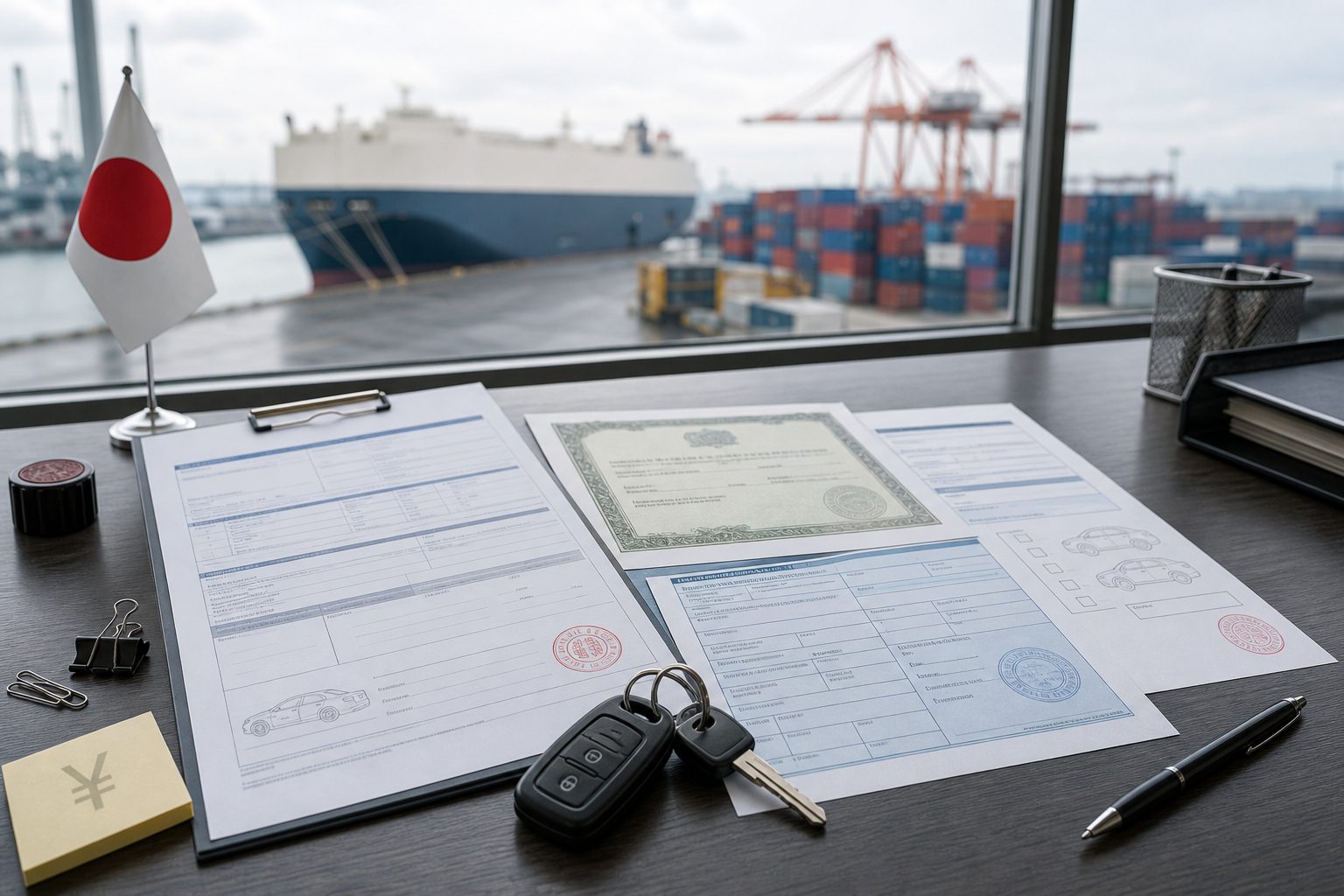
Documents to gather before shipping to Japan
Start with the documents that affect U.S. export, ocean transport, Japanese customs, and destination registration.
For both audiences:
- Original title or ownership document
- Lienholder export authorization, if financed
- Current registration
- Bill of sale, purchase invoice, or valuation support
- Passport/ID documents
- Bill of lading and ocean shipping paperwork
- Insurance documents or premium statement where required for customs value
- Vehicle details: VIN/chassis number, year, make, model, engine size, fuel type, odometer, color, and dimensions
- Photos of VIN/chassis plate, odometer, emissions labels, tires, lights, engine bay, and condition
- Any prior foreign registration showing the vehicle was used abroad, especially if claiming household-goods treatment
For PCS service members, also gather:
- PCS orders and amendments
- DoD ID/sponsor information
- VPC documents
- Power of attorney if needed
- Destination installation vehicle-registration checklist
- Driver training/USFJ permit requirements
- Insurance and road tax instructions from the base
For private importers, also gather:
- Import declaration support documents
- Customs broker appointment documents, if using a broker
- Documents needed for Customs Form C-8050
- Parking certificate/local registration documents if required
- Inspection and compliance paperwork for the Land Transport Authority
Common delay points
Japan-bound vehicle imports usually get delayed for predictable reasons:
- Booking ocean transport before confirming PCS/SOFA vs private permanent vs temporary import status
- Missing lienholder export authorization
- VIN/chassis number mismatch between title, bill of lading, import declaration, and Customs Form C-8050
- Assuming customs clearance means the vehicle can immediately be driven
- No plan for Japanese inspection, JCI, insurance, road tax, registration, or plates
- Missing proof of prior ownership/use when claiming household-goods treatment
- Planning to sell or transfer the vehicle without checking duty/tax restrictions
- Importing a modified, oversized, specialty, or non-standard vehicle without registration advice
- For PCS moves, relying on another person to pick up/register the vehicle without the right POA or sponsor authority
- Waiting until arrival to ask the base vehicle office what is required
TGAL shipping guidance before booking ocean transport
TGAL can help plan the international vehicle shipping side before the vehicle leaves the U.S. That means matching the shipment to the owner’s status, checking document readiness, and avoiding a vehicle that arrives before the registration path is clear.
For Japan shipments, the planning conversation should happen before booking:
- Is this a PCS move, private permanent import, household-goods import, or temporary import?
- Which port and destination installation or city will handle release/registration?
- Is the vehicle financed?
- Does the owner have the title, lienholder letter, and registration documents?
- Who will handle Japan customs clearance?
- Who will handle inspection, insurance, road tax, parking certificate, and registration after arrival?
- Is the vehicle modified, oversized, specialty, or likely to raise inspection issues?
TGAL handles the international vehicle shipping and logistics planning. For customs/import-entry questions involving U.S. imports, U.S. returns, or vehicles coming back from Japan to the United States, TGAL also works with All Ways International Customs House Brokerage (AWIS). Japan-side import clearance, taxes, inspection, and registration should be verified with Japan Customs, MLIT/Land Transport Authority, the destination base transportation or vehicle registration office, or a qualified Japanese customs/registration specialist.
Bottom line
A Japan vehicle shipment should be planned backward from the owner’s destination path. PCS service members need to confirm SOFA/base registration, insurance, road tax, inspection, and driving-permit rules. Private importers need to plan for Japan Customs, Customs Form C-8050, inspection, registration, insurance, taxes, and road-use requirements.
Rules change, and installation procedures can change without much ceremony. Before booking ocean transport, verify current requirements with Japan Customs, MLIT/Land Transport Authority, the destination base transportation office, host-nation authorities, or a qualified customs/registration specialist.
Need help shipping a vehicle to Japan? Contact TGAL before you book so the ocean shipment matches the import and registration plan on the other side.
Sources
- Japan Customs: Import Clearance Procedures for Vehicles
- Japan Customs: Outline of Tariff and Duty Rates System
- Japan Customs: Export/Import Procedure for Private Automobiles Using a Carnet
- MLIT: Motor Vehicle Inspection and Registration Guide
- MLIT: Registration is a requisite to drive a vehicle
- MLIT: Vehicle inspection legal requirements
- MLIT: Road Vehicles Act safety and pollution-prevention standards
- JAF: For Visitors Bringing Vehicles to Japan
- Japan MOFA: U.S.-Japan Status of Forces Agreement
- Yokota Air Base: Road Tax Information
Aldo Flores
Founder & CEO, Trans Global Auto Logistics
Licensed NVOCC • FMC Regulated • 30+ Years in International Vehicle Logistics
Aldo Flores is the CEO of Trans Global Auto Logistics, a licensed NVOCC and FMC-regulated freight forwarder based in Arlington, Texas. With 23 years at TGAL and a lifetime in the family business, Aldo has overseen the shipping of more than 100,000 vehicles worldwide — from military PCS moves and classic cars to commercial fleet exports and boat shipments. TGAL was founded by his mother over 25 years ago, and under Aldo's leadership it has grown into one of the most trusted names in overseas vehicle transport.