Published: July 29, 2026
PCS orders to Korea create one of the most common vehicle-shipping questions military families ask: “What does the government ship, and what do we pay for ourselves?”
The short answer is simple, but the planning details are not. For an OCONUS move, the government generally pays to ship one privately owned vehicle if the overseas installation allows it and the member has the entitlement. Additional vehicles, special circumstances, pickup or delivery outside the government process, and timing gaps are usually where families start paying out of pocket.
TransGlobal Auto Logistics helps military families plan those gaps before the report date gets close.
Quick answer
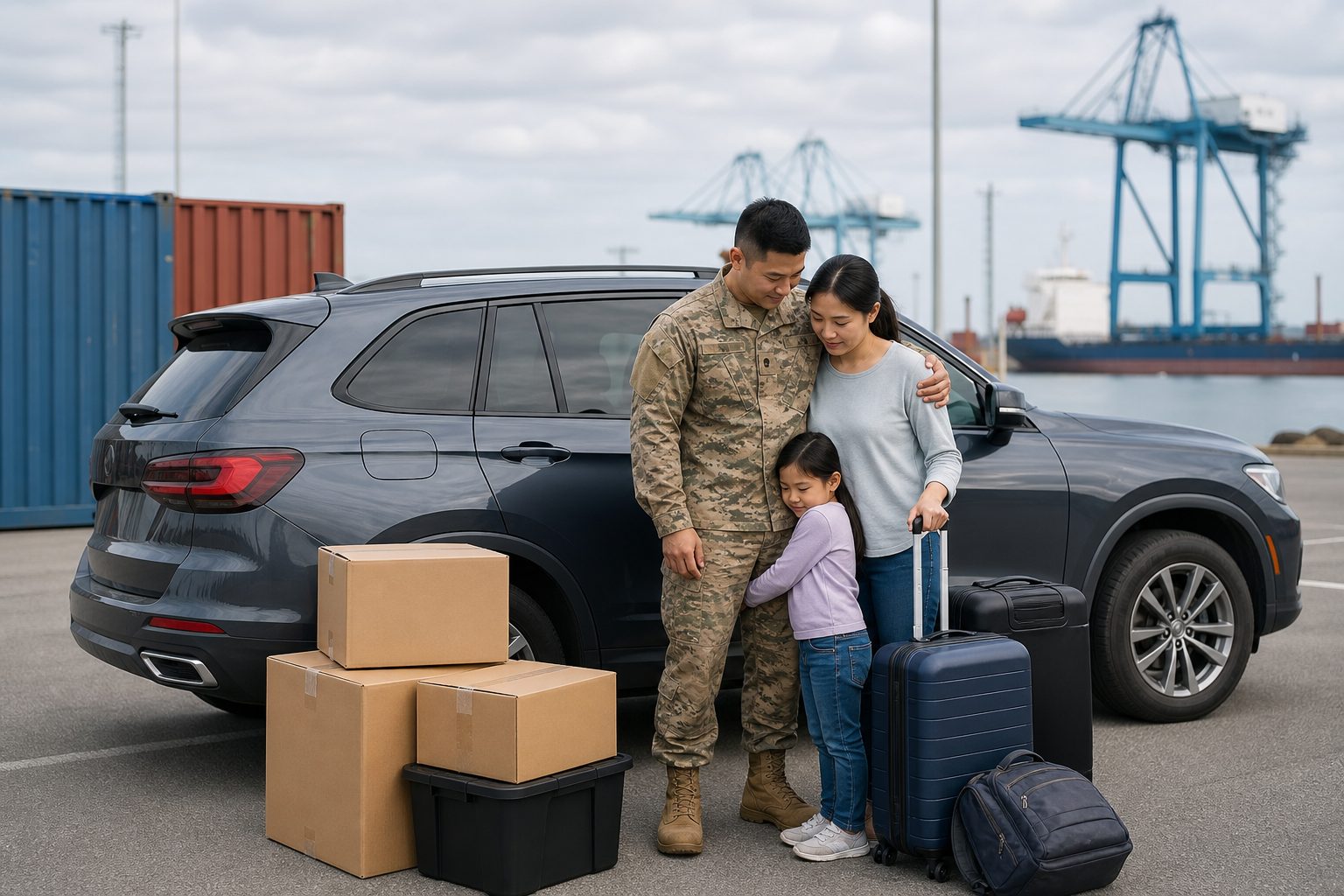
For a PCS to Korea, families should usually plan around three buckets:
- Government-arranged POV shipment: generally one eligible POV through the official process when authorized.
- Personally arranged vehicle shipping: second vehicles, motorcycles, non-entitled vehicles, or moves outside the government process.
- Out-of-pocket transition costs: rides, rental cars, storage, local delivery, cleaning, documentation, registration, insurance, and timing buffers.
The exact answer depends on orders, command sponsorship, installation rules, vehicle size, ownership, license/registration status, and current government shipping instructions. Do not book a private shipment based only on a friend’s PCS story.

What the government generally ships
Military OneSource says the government generally pays to ship one vehicle to the final destination if the overseas installation allows it. Move.mil’s POV guidance also states that for OCONUS-to-CONUS, CONUS-to-OCONUS, or OCONUS-to-OCONUS moves, only one POV owned or leased for personal use may be shipped at government expense, subject to limits such as the 20 measurement ton guidance.
For Korea, Eighth Army newcomer guidance says the Army authorizes each Soldier to ship only one vehicle at government expense and that additional vehicles are at the family’s expense.
That is the planning baseline: one authorized POV, not every vehicle the family owns.
What families often pay for themselves
Families commonly pay out of pocket for anything outside the authorized government shipment. That may include:
- A second car
- A motorcycle when the car uses the government entitlement
- A vehicle that is not eligible for the government shipment
- Pickup from home to a port or VPC if not included in the official process
- Delivery from a port or VPC to a home, hotel, or temporary lodging
- Storage before drop-off or after arrival
- Rental car or rideshare while waiting
- Vehicle cleaning, maintenance, tires, battery, or repairs needed before turn-in
- Documentation, notarization, lienholder letters, or title fixes
- Insurance changes and local registration steps
- Private shipping if timing does not fit the family’s report date
The government entitlement can be valuable, but it does not make the family transportation problem disappear.
Why Korea requires extra planning
Korea is not just an overseas shipment. It is an overseas shipment into a rules-heavy operating environment.
Families should confirm whether the member is command sponsored, whether the vehicle can be registered and operated in Korea, whether the driver has the required license or permit status, and what the receiving installation requires. USFK and installation guidance can affect who may own, operate, and register a POV in Korea.
That means the best vehicle on paper is not always the best vehicle to ship.
Before choosing which car gets the government slot, ask:
- Is the car reliable enough for Korea roads and family needs?
- Is it the right size for parking, installation access, and local driving?
- Is there a lienholder, lease restriction, or title issue?
- Will the family need a second vehicle immediately after arrival?
- Does command sponsorship or local policy affect registration?
- Is the vehicle worth shipping compared with selling, storing, or buying locally?
The second vehicle decision
The second vehicle is where many PCS budgets get surprised.
If the government shipment covers one POV, the second vehicle usually becomes a private logistics decision. Families may choose to:
- Store it in the United States
- Sell it before departure
- Ship it privately to Korea if allowed and practical
- Ship it to a family member or storage location stateside
- Use one vehicle in Korea and buy locally if needed
There is no universal best answer. The right decision depends on vehicle value, family size, tour length, installation rules, parking, insurance, and how quickly the family needs transportation after arrival.
If the second vehicle is still financed or leased, check permissions early. A lienholder or leasing company can delay or block shipment if the paperwork is not handled before the drop-off window.
Timing costs families forget
Even when the government ships the authorized POV, families can still face timing costs.
Common gaps include:
- Needing transportation after dropping off the car in the United States
- Arriving in Korea before the vehicle is available
- Waiting for inspection, registration, insurance, or base access steps
- Having temporary lodging far from routine errands
- Needing child, pet, or work transportation before the family is settled
Those are not always “shipping costs,” but they are real PCS costs. Put them in the budget anyway.
What to prepare before vehicle turn-in
Before turning in a POV or booking a private shipment, prepare:
- PCS orders and amendments
- Military ID and required authorization documents
- Current registration
- Title or lienholder authorization
- Driver license and insurance documents
- Power of attorney if one spouse is handling the vehicle
- Keys, alarm instructions, and contact information
- Cleaning and fuel-level requirements
- Photos of vehicle condition
- A plan for transportation after drop-off
For privately arranged shipping, also confirm the pickup address, delivery address, port handling, customs process, insurance coverage, and what happens if orders change.
When private shipping makes sense
Private shipping may make sense when:
- The family has a second vehicle that is essential
- The government timeline does not fit the report date
- The vehicle needs movement to or from a VPC, port, storage facility, or family address
- A motorcycle or specialty vehicle is not covered by the government shipment
- The family decides not to use the government POV entitlement for that specific vehicle
- Orders change and the vehicle needs a fast alternate plan
The key is to avoid booking private shipping before confirming installation rules and eligibility. A private carrier can move a vehicle, but it cannot make the vehicle authorized for local registration or use.
TGAL takeaway
For a PCS to Korea, start with the entitlement: usually one authorized POV at government expense when the installation allows it. Then build a second plan for everything the entitlement does not cover.
That second plan should include out-of-pocket shipping, storage, rides, rental car time, title or lienholder documents, local registration steps, and the possibility that orders or timelines shift.
TransGlobal Auto Logistics can help families compare the government shipment timeline with private shipping options, so the move plan fits the family instead of surprising them at the worst possible moment.
Sources checked: Military OneSource overseas POV guidance; Move.mil POV and moving entitlement guidance; Eighth Army Korea POV shipping guidance; USFK/installation vehicle registration guidance.
Aldo Flores
Founder & CEO, Trans Global Auto Logistics
Licensed NVOCC • FMC Regulated • 30+ Years in International Vehicle Logistics
Aldo Flores is the CEO of Trans Global Auto Logistics, a licensed NVOCC and FMC-regulated freight forwarder based in Arlington, Texas. With 23 years at TGAL and a lifetime in the family business, Aldo has overseen the shipping of more than 100,000 vehicles worldwide — from military PCS moves and classic cars to commercial fleet exports and boat shipments. TGAL was founded by his mother over 25 years ago, and under Aldo's leadership it has grown into one of the most trusted names in overseas vehicle transport.