Published: August 10, 2026
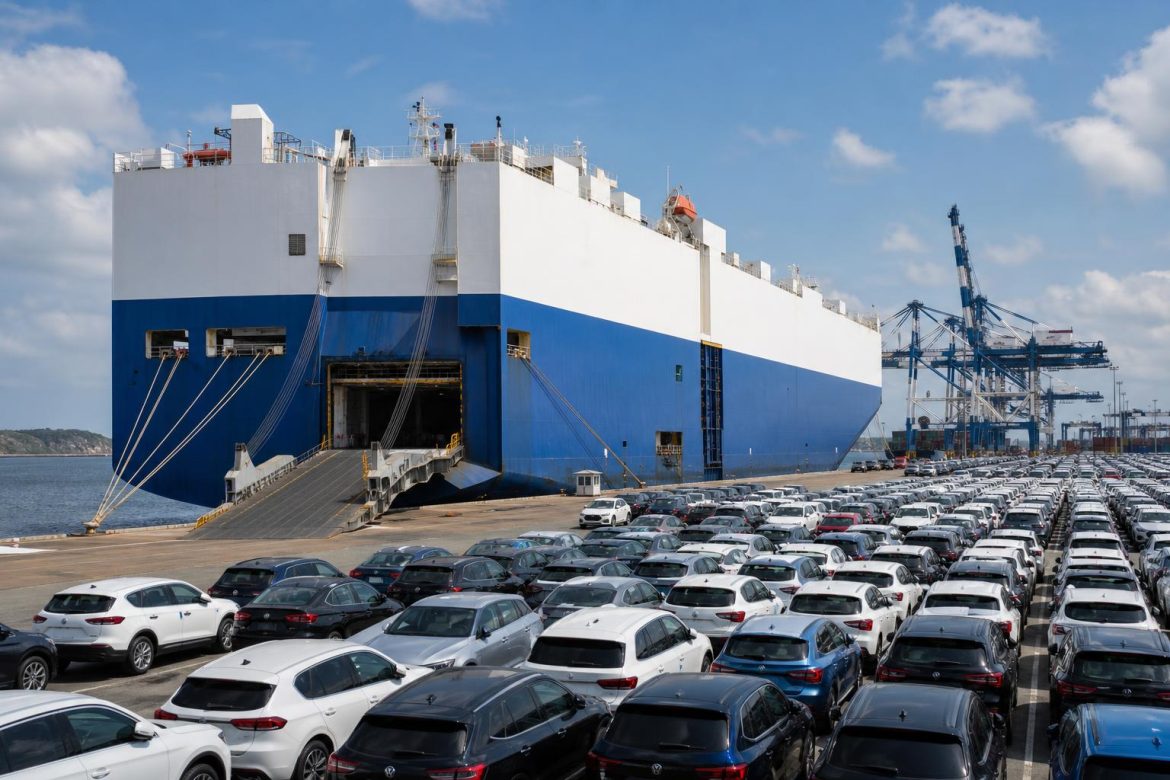
RoRo vehicle shipping rates do not move only because fuel changes or one vessel fills up. Capacity matters too. When the market has too few pure car and truck carriers, space gets tight, sailing choices narrow, and carriers can hold stronger rates. When new PCTC capacity enters service, the pressure can ease, but usually slowly and unevenly.
That is why recent PCTC ordering matters. It is not an urgent alert for anyone shipping a POV next week. It is a long-term capacity signal for military families, dealers, classic-car buyers, and high-and-heavy shippers who depend on RoRo space.
Quick answer
More PCTC orders are good for vehicle shippers over the long run because they add modern RoRo capacity to a market that has been tight since the post-COVID recovery. But there are three catches:
- New vessels ordered today may not deliver until 2028, 2029, or later.
- New ships do not automatically serve every trade lane.
- Demand from Chinese vehicle exports, EVs, trucks, machinery, and project cargo can absorb a lot of new space before retail shippers feel relief.
So the takeaway is balanced: new PCTC orders are a positive sign, but they are not a promise that every RoRo rate will drop this month.
What is a PCTC?
A PCTC is a pure car and truck carrier. It is the RoRo vessel type built to carry passenger vehicles, vans, trucks, buses, construction machinery, agriculture equipment, and other rolling cargo.
For TGAL customers, PCTC capacity affects several shipment types:
- Military PCS privately owned vehicles
- Dealer and manufacturer vehicle exports
- Classic-car imports and exports
- Boats, trailers, and motor homes that can move on RoRo
- High-and-heavy equipment that rolls or can be safely towed aboard
The more suitable space available on a trade lane, the more options forwarders and NVOCCs have when matching a vehicle to a sailing.

Why capacity got tight
The vehicle-carrier market went through a strange cycle. During COVID, vehicle demand fell, supply chains froze, and older ships left the fleet. When vehicle production and trade came back, there were not enough modern PCTCs in the right places. Charter rates jumped, space tightened, and some shippers had to wait longer for reliable sailings.
The Loadstar reported in December 2025 that car-carrier orders had dropped sharply that year after heavy contracting from 2022 through 2024. It also cited Clarksons data showing only six new PCTCs ordered in 2025, compared with much heavier annual ordering during the prior boom. That slowdown did not mean demand disappeared. It meant owners were cautious because ship prices stayed high and delivery slots had moved far out.
Now ordering appears to be picking back up. Riviera reported in July 2026 that Sallaum Lines expanded its PCTC newbuilding program, with large LNG dual-fuel vessels scheduled into 2029. Riviera also noted that the PCTC orderbook-to-fleet ratio had fallen to roughly 20.4% in CEU terms after being much higher during the prior ordering wave.
Xinde Marine News reported that MSC-owned Global Car Carriers listed 12 large LNG dual-fuel PCTCs under construction in China for delivery between 2028 and 2030. Xinde also reported that roughly 31 car carriers had been ordered so far in 2026, based on Clarksons data and public projects, with Chinese yards taking most of those orders.
For shippers, that means the market is trying to solve a capacity problem, but the solution arrives by shipyard calendar. And shipyard calendars are not exactly known for sprinting. They are more “port appointment with three stamps and a lunch break.”
Why new orders do not fix rates overnight
A new PCTC order affects rates only after several things happen.
First, the ship has to be built. Many current newbuilding programs are scheduled for 2028 through 2030. That does not help a family trying to move a second POV this PCS season.
Second, the ship has to be deployed on the trade where the demand exists. A new large PCTC assigned to Asia-Europe does not directly add space from the U.S. East Coast to Bremerhaven, or from the Gulf to the Middle East.
Third, cargo commitments matter. Many new vessels are tied to automakers, long-term charters, regional networks, or defined trade programs. The ship may technically add fleet capacity, but some of that space may already be spoken for before it ever reaches the spot market.
Fourth, vessel design matters. Newer PCTCs often carry more CEUs, use dual-fuel systems, and include more flexible decks for trucks and machinery. That helps the overall market, but it does not mean every unit type gets equal benefit. A sedan, a lifted pickup, an RV, and a piece of construction equipment do not consume capacity the same way.
Demand is still the other half of the equation
Capacity only tells one side of the rate story. Demand matters just as much.
China’s vehicle export growth has been one of the biggest forces in the RoRo market. Xinde reported that China exported more than one million vehicles in June 2026 and more than five million vehicles in the first half of the year, citing data from the China Association of Automobile Manufacturers. That does not mean every vehicle moved by PCTC. Some move by container, rail, or road. But it shows why carriers are still willing to invest in dedicated vehicle capacity.
The cargo mix is also wider than passenger cars. EVs, hybrid vehicles, trucks, buses, construction machinery, agricultural equipment, and other high-and-heavy cargo are all competing for deck space. That matters for TGAL because our business is not only standard sedans. We move cars, boats, trailers, motor homes, heavy trucks, agriculture equipment, construction equipment, and other rolling cargo.
When high-and-heavy demand rises, a sailing can feel full even if the published CEU number looks healthy. Deck height, ramp limits, weight, lash points, and port handling all decide what can actually move.
What this means for military PCS families
For PCS customers, the practical advice has not changed much:
- Book early when orders are firm and the vehicle is ready.
- Make sure title, lienholder, registration, and ID documents are clean before the sailing window.
- Do not assume every port pair has the same RoRo availability.
- If you are shipping a second vehicle, ask whether RoRo, container, or domestic positioning changes the cost.
- Build in room for documentation delays. A missing lienholder authorization can do more damage than a market headline.
New PCTC orders may help rate stability in future seasons, especially if more capacity reaches the lanes military families use. But for an active PCS move, the current vessel schedule and document readiness matter more than the global orderbook.
What this means for dealers and specialty shippers
Dealers, exporters, boat shippers, and high-and-heavy customers should watch PCTC orders as a planning signal. More modern capacity can create better sailing options over time, but lane coverage and cargo fit still decide the real quote.
If you are moving rolling cargo internationally, the useful questions are specific:
- Which RoRo carriers serve the origin and destination region?
- Are the new vessels going into that network or a different one?
- Is your cargo standard passenger-vehicle space, or does it need height, width, weight, or special handling review?
- Are port congestion, customs holds, or inland trucking costs more likely to move the quote than ocean freight itself?
- Is there a viable container alternative if RoRo space is tight?
For high-and-heavy cargo, a lower headline freight rate is not helpful if the cargo cannot be accepted safely. The quote has to match the actual machine, not a best-case version of it.
What TGAL is watching
The PCTC orderbook is worth tracking, but it should be read with restraint. We are watching:
- Delivery timing for large PCTCs scheduled from 2026 through 2030
- Which carriers place new ships on U.S.-connected lanes
- Whether China export growth continues absorbing new capacity
- Charter-rate direction as more ships deliver
- Availability for high-and-heavy units, not just passenger cars
- Port reliability, bunker charges, and surcharge behavior alongside base ocean freight
The rate question is not “did somebody order ships?” The better question is “will usable capacity reach the lane and cargo type we need?”
Bottom line
New PCTC orders are a healthy sign for the RoRo market. They show carriers and owners expect long-term demand for vehicle shipping, and they should add capacity as vessels deliver over the next several years.
But customers should not treat the orderbook like a same-week discount notice. Rates still depend on lane, vehicle type, season, fuel, port conditions, carrier space, and documentation timing.
For now, the smart move is simple: watch capacity trends, but quote the shipment in front of you. If the vehicle, route, and documents are ready, TGAL can help compare RoRo and container options and find the cleanest path before the market changes again.
Sources checked
- Riviera Maritime Media, “Sallaum Lines extends PCTC newbuilding drive with 1+1 LNG dual-fuel vessels,” July 28, 2026.
- Xinde Marine News, “MSC Makes PCTC Newbuilding Debut with 12-Ship China Programme,” July 2026.
- Xinde Marine News, “China’s PCTC Delivery Boom Meets a Million-Car Export Month,” July 2026.
- The Loadstar, “Orders for car-carriers plummet as shipbuilding market dynamics shift,” December 18, 2025.
Aldo Flores
Founder & CEO, Trans Global Auto Logistics
Licensed NVOCC • FMC Regulated • 30+ Years in International Vehicle Logistics
Aldo Flores is the CEO of Trans Global Auto Logistics, a licensed NVOCC and FMC-regulated freight forwarder based in Arlington, Texas. With 23 years at TGAL and a lifetime in the family business, Aldo has overseen the shipping of more than 100,000 vehicles worldwide — from military PCS moves and classic cars to commercial fleet exports and boat shipments. TGAL was founded by his mother over 25 years ago, and under Aldo's leadership it has grown into one of the most trusted names in overseas vehicle transport.