Last Updated: June 24, 2026 | Originally Published: March 14, 2026
Fuel Surcharge Update: What’s Changing and Why
Two separate fuel cost increases are hitting international vehicle shipping right now. They come from different sources, affect different parts of your shipment, and have different timelines. This post breaks down both so you know exactly what’s driving your costs.
Part 1: Domestic Trucking Fuel — The Diesel Spike
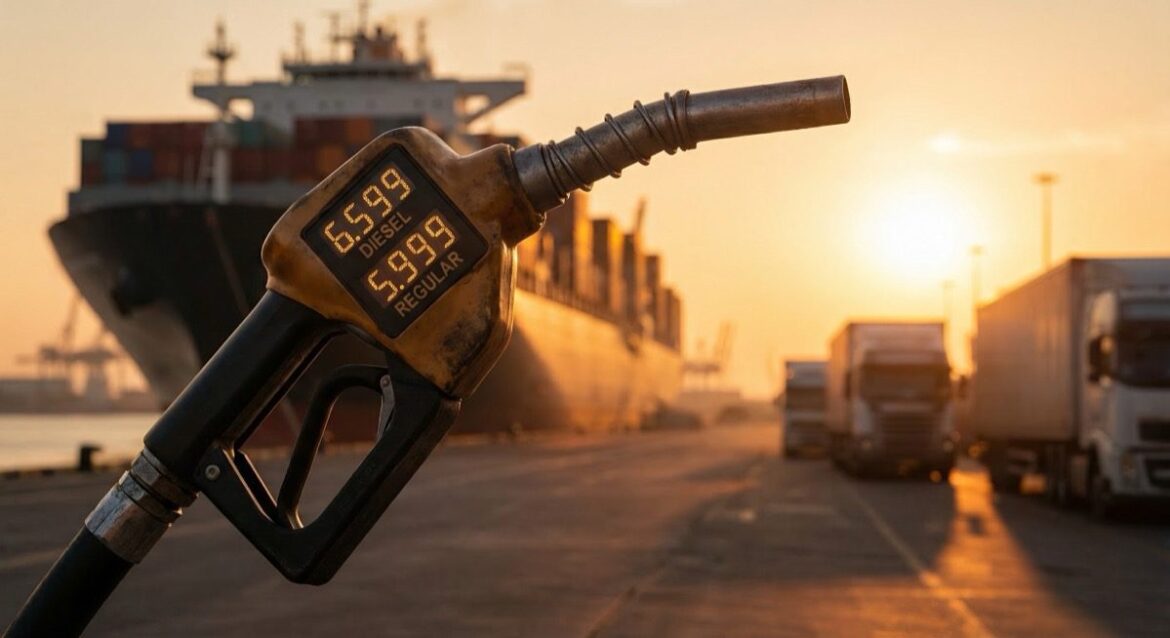
The first cost increase is domestic diesel — the fuel that powers drayage trucks to and from the port, and domestic pickup and delivery of your vehicle. We don’t set diesel prices, but we have to pass the increase on.
According to the U.S. Energy Information Administration (EIA), the national average for on-highway diesel hit $4.86 per gallon the week of March 9, 2026 — up 96 cents in a single week. That’s the largest one-week increase on record.
Here’s the Gulf Coast price trend, which is most relevant for our port operations:
| Week | Gulf Coast Diesel (per gallon) |
|---|---|
| February 16, 2026 | $3.37 |
| February 23, 2026 | $3.49 |
| March 2, 2026 | $3.60 |
| March 9, 2026 | $4.62 |
That’s a $1.25 increase in less than a month — more than 30% above the February average. The driver is the Strait of Hormuz crisis: Iran has been attacking merchant vessels in the strait, which handles roughly 20% of the world’s oil supply. Crude oil crossed $100 per barrel, and diesel followed.
TGAL’s Fuel Surcharge: 8% → 12%
On March 10, we implemented an 8% fuel surcharge on the domestic trucking portion of international vehicle shipments. Given what diesel has done since then, we’re adjusting that to 12%, effective Monday, March 16, 2026.
This surcharge applies to the trucking leg only — the domestic pickup, delivery, and drayage to and from the port. It appears as a separate line item on your quote and invoice so you can see exactly what you’re paying. We review it regularly. If diesel comes down, the surcharge comes down with it.
Part 2: Ocean Carrier Fuel Surcharges — What’s Coming April 1
The second cost increase is on the ocean side, and this one comes from the carriers themselves. It’s separate from TGAL’s trucking surcharge.
Ocean carriers set their own fuel surcharges based on bunker fuel prices — the heavy fuel oil that powers vessels. Bunker fuel prices track crude oil, which means the Hormuz crisis is hitting them too. Carriers typically adjust their Bunker Adjustment Factor (BAF) quarterly, but the speed of the oil spike has forced multiple carriers to announce Emergency Fuel Surcharges (EFS) on top of their normal BAF.
Here’s what the major carriers have announced:
| Carrier | Surcharge | US Effective Date |
|---|---|---|
| Hapag-Lloyd | EFS: $160/TEU front haul, $70/TEU back haul | April 8, 2026 |
| CMA CGM | Emergency Fuel Surcharge | March 23, 2026 |
| MSC | Emergency Fuel Surcharge | March 23, 2026 |
| ONE (Ocean Network Express) | Emergency Fuel Surcharge | April 9, 2026 |
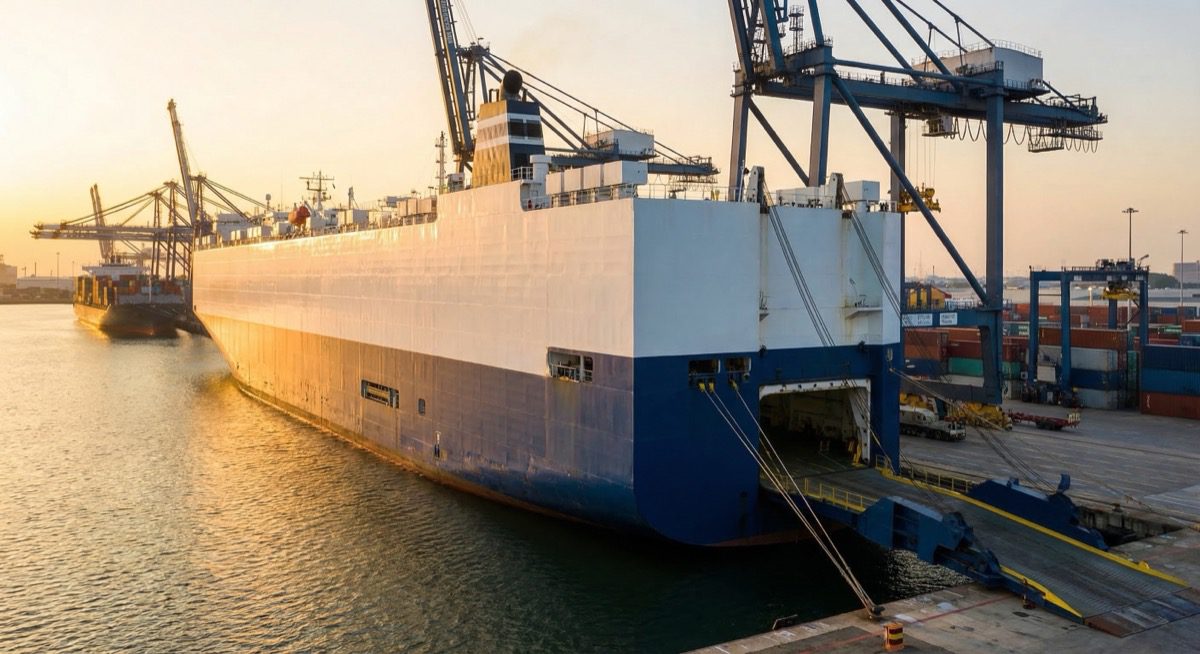
For RoRo carriers — the ones that actually transport vehicles on roll-on/roll-off vessels — Hoegh Autoliners, Wallenius Wilhelmsen (WWL), and K-Line typically adjust their BAF on a quarterly basis. Q2 2026 BAF adjustments take effect April 1 and are expected to reflect the sharp increase in bunker fuel prices. These surcharges are set by the carriers, not by TGAL, and they apply to the ocean freight portion of your shipment.
What this means for you: quotes issued before these carrier surcharges take effect may need to be updated. If you received a quote recently, check with your TGAL coordinator to confirm whether the ocean freight rate includes the updated BAF and any emergency surcharges.
How This Breaks Down on Your Invoice
To make this clear: your shipment cost has two fuel-related components, and they come from different places.
- TGAL fuel surcharge (12%): Covers the domestic trucking leg — drayage, pickup, delivery. Set by TGAL based on US diesel prices. Effective March 16.
- Ocean carrier BAF/EFS: Covers the ocean freight leg. Set by the shipping line (Hoegh, WWL, K-Line, etc.) based on bunker fuel prices. Q2 adjustments effective April 1, with emergency surcharges from container carriers as early as March 23.
Both appear as separate line items. Neither is hidden in your base rate.
What This Means for Military PCS Shipments
We know military PCS moves are already stressful — you’re coordinating a household move, a new duty station, school transfers, and a vehicle shipment on a timeline you didn’t set.
Here’s what you should know:
- Every surcharge is shown as a separate line item. You’ll never wonder what you’re actually paying for.
- If you received a quote before March 16, contact your TGAL coordinator to confirm whether the updated rates apply to your shipment.
- We review the trucking surcharge regularly. If diesel prices come down, it comes down. Ocean carrier BAF resets quarterly.
- Rates reflect current fuel costs at the time of your shipment. Both trucking and ocean fuel costs are trending up, so quotes may change as conditions evolve.
What About Freight Forwarders and Dealers?
Both surcharges apply to all international vehicle shipments — personal vehicles, boats, and commercial freight. If you need updated rate sheets or documentation for your clients, contact your TGAL account manager. We can provide a breakdown showing the trucking surcharge and carrier BAF/EFS separately.
The Bottom Line
Two things are driving costs up right now: diesel at the pump (affecting trucking) and bunker fuel on the water (affecting ocean freight). They come from different sources, hit at different times, and are priced differently. We’re being transparent about both.
The root cause is the same — the Strait of Hormuz is effectively closed, oil is above $100 a barrel, and every part of the supply chain is feeling it. We didn’t create the situation, but we’re not going to hide the cost impact from you either.
If you have questions, call us. If you need a quote, request one here. We’ll show you exactly what you’re paying and where it’s coming from.
Sources: U.S. Energy Information Administration (EIA) weekly retail diesel price data, March 2026. Hapag-Lloyd, CMA CGM, MSC, ONE emergency fuel surcharge advisories, March 2026. EIA Short-Term Energy Outlook, March 2026.
Aldo Flores
Founder & CEO, Trans Global Auto Logistics
Licensed NVOCC • FMC Regulated • 30+ Years in International Vehicle Logistics
Aldo Flores is the CEO of Trans Global Auto Logistics, a licensed NVOCC and FMC-regulated freight forwarder based in Arlington, Texas. With 23 years at TGAL and a lifetime in the family business, Aldo has overseen the shipping of more than 100,000 vehicles worldwide — from military PCS moves and classic cars to commercial fleet exports and boat shipments. TGAL was founded by his mother over 25 years ago, and under Aldo's leadership it has grown into one of the most trusted names in overseas vehicle transport.