Last Updated: June 24, 2026 | Originally Published: April 28, 2026
The 25-year rule just unlocked a new class of Japanese domestic market vehicles. As of January 2026, cars originally manufactured for the Japanese market in model year 2001 are now legal to import into the United States without going through full EPA and DOT compliance modifications. For enthusiasts, this is a big deal.
Here’s exactly which cars qualify, what the import process looks like, and what it costs to get one into your garage.
The 25-Year Rule, Explained Quickly
Under the National Traffic and Motor Vehicle Safety Act and EPA regulations, vehicles manufactured for foreign markets that don’t meet US federal motor vehicle safety standards can be imported after 25 years without modifications. At 25+ years old, a vehicle is classified as an antique/collector item and is exempt from FMVSS (Federal Motor Vehicle Safety Standards) and EPA emissions compliance.
This is why JDM vehicles have been trickling in for decades — the Nissan Skyline GT-R R32 (1989-1994) opened a wave when it hit the threshold. R33s followed. R34s hit in 2024.
Now it’s 2001’s turn.
2001 JDM Vehicles Now Eligible to Import
These are the models generating the most interest:
Nissan Silvia S15 (1999-2002)
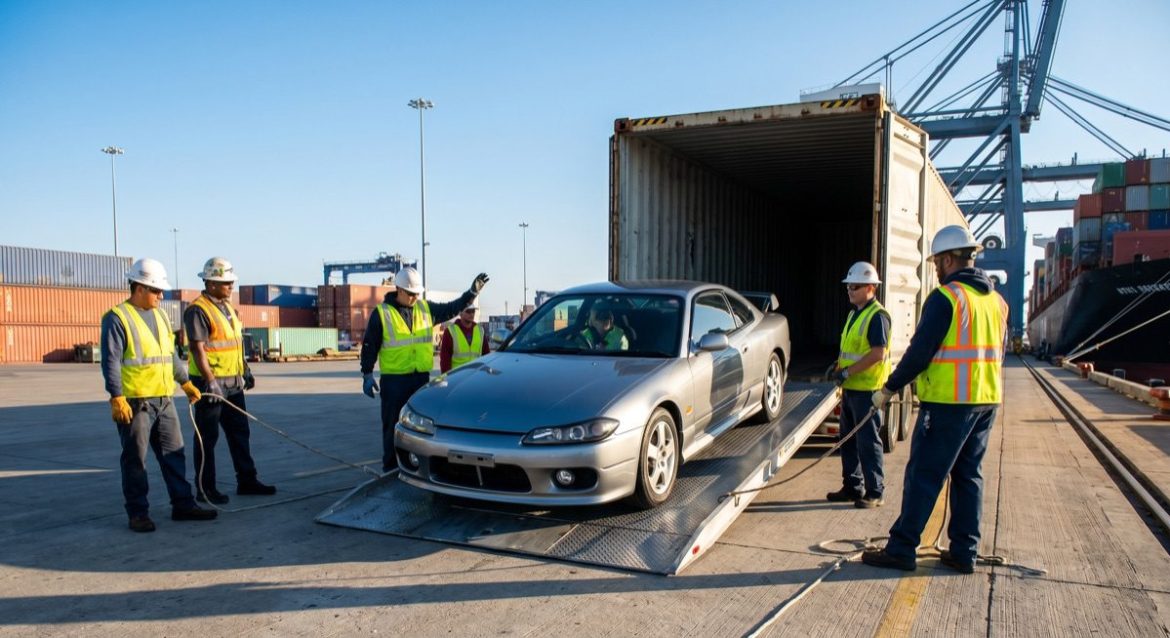
The S15 was never sold in the US. It replaced the S14 in Japan and came with either a naturally aspirated SR20DE (165 hp) or the turbocharged SR20DET (250 hp). The Spec-R version with the turbo engine and a 6-speed Getrag gearbox is what most importers are after. Low weight, rear-wheel drive, and that engine in stock form — it’s not a mystery why this car has a 25-year waiting list of enthusiasts.
Toyota Altezza RS200 (1998-2005)
The Altezza was the car that became the Lexus IS300 in the US — but the Japanese version is different. The RS200 came with a 3S-GE BEAMS engine (210 hp), a limited-slip diff, and a manual 6-speed. The IS300 got a different engine and different tuning. JDM Altezza fans have wanted the RS200 specifically for years.
Mitsubishi Lancer Evolution VII (2001-2003)
The Evo VII was the first Evolution to use the CP9A platform. 280 hp from the 4G63 (Japan’s gentleman’s agreement limit), all-wheel drive, and the Super AYC rear differential on the GSR trim. The Evo VIII arrived in the US; the VII did not. 2001 production years are now importable.
Subaru Impreza WRX STI (2001 model year)
The GD-chassis WRX STI — the one that eventually became the US-market STI in 2004 — has its 2001 examples crossing the threshold. The JDM STI had more power than the US version (280 hp vs. 300 hp in later years, with varying figures by market spec), and trim levels unavailable in the US like the WRX STI RA (lightweight rally version).
Honda Integra Type R DC5 (2001-2006)
The DC5 Integra Type R ran the K20A engine — naturally aspirated, 220 hp, screaming to 8,500 RPM. It came with a close-ratio 6-speed, Brembo brakes, and LSD as standard. The US got the Acura RSX Type-S with a detuned version of the same engine. The Type R stayed in Japan. 2001 examples are now eligible.
The Import Process
Importing a JDM vehicle isn’t complicated, but it has specific steps:
Step 1: Source the vehicle. JDM importers in Japan (auctions like USS, TAA, and others) are the main source. Work with a reputable exporter in Japan who can pull auction history, photos, and mileage verification. Prices have increased significantly as the 2001 threshold approached — expect to pay market premium.
Step 2: Export from Japan. Your Japanese seller or exporter handles the de-registration and export declaration. They’ll provide the export certificate and vehicle inspection documentation.
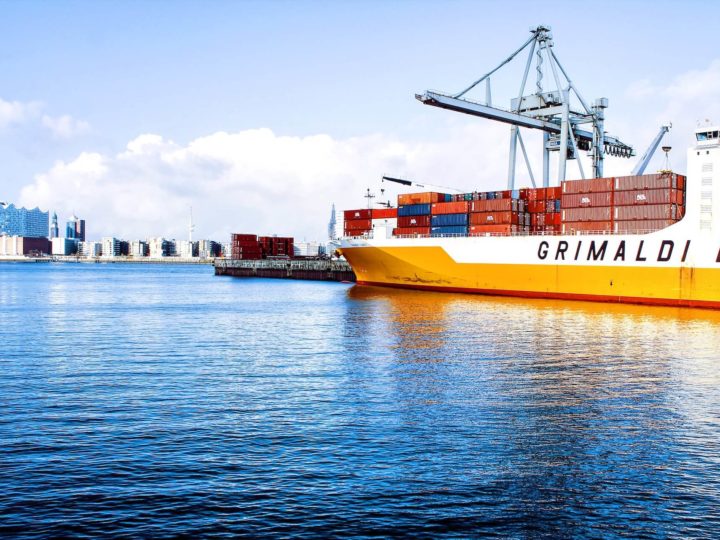
Step 3: Ocean freight to the US. This is where TGAL comes in. We arrange RoRo or container shipping from Japanese ports (Osaka, Nagoya, Yokohama) to US arrival ports. Current transit times from Japan to US West Coast average 18-22 days. East Coast ports add 30-35 days via Panama Canal.
Step 4: Customs clearance at arrival. A licensed customs broker handles the formal entry. For 25-year-old vehicles, you’ll need to declare the 25-year exemption on the entry. CBP will verify the vehicle’s manufacture date — the VIN, Japanese title, and export documentation establish this.
Step 5: State registration. This is the final step and varies by state. Some states (California is the hardest) have additional emissions requirements even for federally exempt vehicles. Texas, Florida, and most other states register JDM imports without additional testing for 25-year vehicles.
Costs to Budget
The numbers vary significantly based on vehicle value and condition, but here’s a realistic range for a moderately valued 2001 JDM vehicle (example: Silvia S15 at $18,000-25,000 auction value):
- Vehicle purchase (auction + Japan-side fees): $18,000-$25,000+
- Japan-side handling and export: $500-$1,000
- Ocean freight (Japan to US West Coast): $1,200-$1,800 (RoRo)
- US customs duties: 2.5% on value for passenger vehicles (no IEEPA reciprocal tariff applies to Japan per current rulings — verify with your broker)
- CBP formal entry and broker fees: $400-$600
- Port handling and drayage: $300-$500
- Total landed cost: Approximately $21,000-$29,000 for the example vehicle
Rare or low-mileage examples of sought-after models (original-owner Evo VII GSR with under 40,000 km) can cost significantly more at auction.
What TGAL Handles
We manage the ocean freight portion — booking the vessel, coordinating with the Japanese exporter on loading, and arranging delivery to your chosen destination port. We work with AWIS, our affiliated customs broker, to handle the clearance side if you want end-to-end service.
If you’re sourcing a 2001 JDM vehicle, contact us early. We can advise on port selection, current vessel schedules from Japanese ports, and typical transit times.
—
Ready to import your 2001 JDM vehicle?
📞 (817) 354-8313
Or start with a freight quote: tgal.us/free-international-shipping-quotes/
Specify the make, model, and Japanese export port, and we’ll give you a current shipping cost.
Aldo Flores
Founder & CEO, Trans Global Auto Logistics
Licensed NVOCC • FMC Regulated • 30+ Years in International Vehicle Logistics
Aldo Flores is the CEO of Trans Global Auto Logistics, a licensed NVOCC and FMC-regulated freight forwarder based in Arlington, Texas. With 23 years at TGAL and a lifetime in the family business, Aldo has overseen the shipping of more than 100,000 vehicles worldwide — from military PCS moves and classic cars to commercial fleet exports and boat shipments. TGAL was founded by his mother over 25 years ago, and under Aldo's leadership it has grown into one of the most trusted names in overseas vehicle transport.