Published: September 25, 2026
Illinois can be a good destination for a 25-year-old JDM import, but it is not a state where the shipping file and the DMV file can live in separate boxes. Ocean freight, Customs release, inland delivery, Illinois Secretary of State title work, RUT tax paperwork, insurance, emissions testing in the Chicago or Metro-East St. Louis areas, and plate choice all need to line up before the vehicle leaves Japan.
If you are shipping a Skyline, Supra, Land Cruiser, HiAce, Delica, Chaser, Crown, Pajero, kei truck, kei van, or another Japanese-market vehicle to Illinois, plan the registration path before booking the sailing. CBP release gets the vehicle into the United States. It does not guarantee Illinois title, registration, insurance acceptance, emissions clearance, or plates.
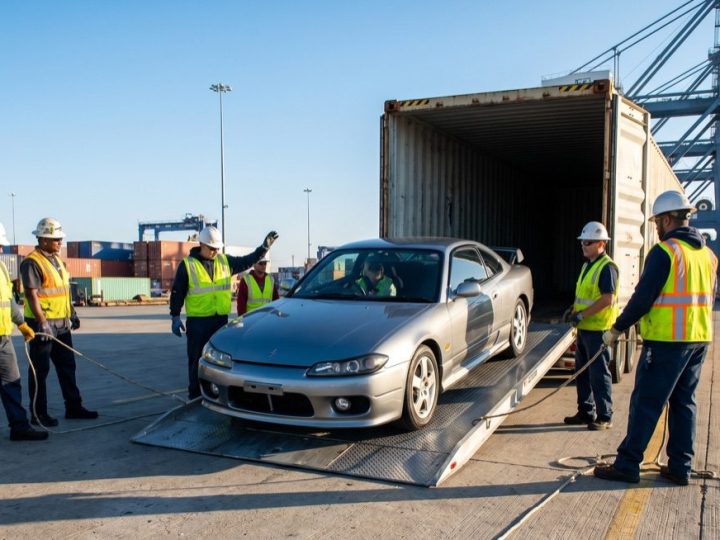
TGAL handles the international vehicle shipping side: Japan/overseas origin coordination, RoRo or container planning when available, ocean freight timing, U.S. arrival planning, and inland delivery after release. For Customs clearance, import entry, CBP paperwork, duty, EPA/DOT documentation, and release planning, AWIS covers the broker side here: Illinois JDM registration and import clearance planning.
Why Illinois registration planning starts before booking ocean freight
A buyer should not pick a vessel only because the sailing date looks good. The documents created overseas and during transport are often the same documents Illinois, a remittance agent, an insurer, or an emissions station may need later.
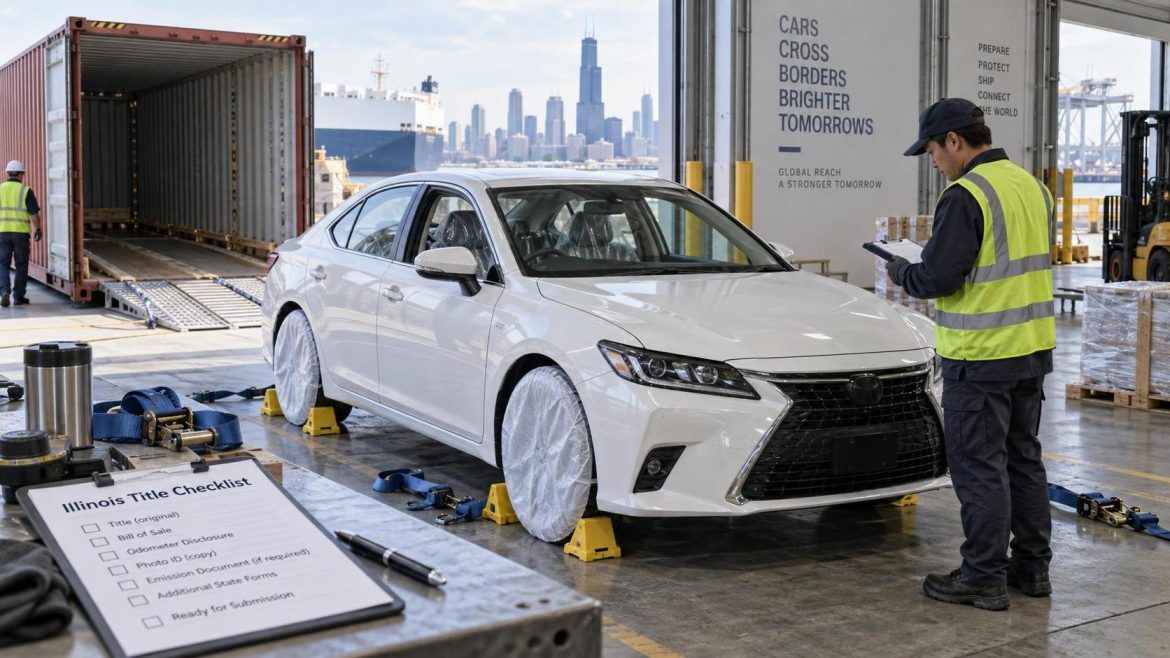
Before the vehicle leaves Japan, confirm:
- The vehicle is federally eligible for import, usually under the 25-year rule for nonconforming JDM vehicles
- The Japanese export certificate, deregistration document, or other foreign ownership document is available
- Foreign-language ownership documents can be translated into English
- The bill of sale shows the year, make, model, chassis/VIN, seller, buyer, and purchase price
- The chassis number is readable on the vehicle and consistent across all documents
- The Customs broker will provide CBP Form 7501 and release support after entry
- DOT Form HS-7 and EPA Form 3520-1 are handled and saved in the file
- Illinois insurance can be issued using the exact Japanese chassis number when there is no 17-digit VIN
- The buyer knows whether the vehicle will be registered in an Illinois emissions testing area
- The plate path matches actual use: standard, antique, or expanded-use antique
- Illinois title, registration, plate, tax, and special-plate costs are budgeted
This is where small details save real money. Fixing a chassis-number mismatch while the car is still with the exporter is annoying. Fixing it after port release, while storage and inland delivery clocks are moving, is where paperwork goes to become a dock fee.
How the shipping-to-registration timeline usually works
A clean Illinois import timeline usually looks like this:
- The buyer confirms federal eligibility and Illinois title/registration concerns before purchase or booking.
- The seller/exporter prepares the Japanese export or ownership documents.
- TGAL coordinates the ocean move and U.S. arrival plan.
- The Customs broker prepares the import entry using the bill of lading, invoice or bill of sale, ownership documents, DOT HS-7, EPA paperwork when required, and related records.
- CBP releases the vehicle at the U.S. port.
- Inland transport moves the vehicle to Illinois, storage, an inspection or service location, or the buyer’s selected delivery point after release.
- The buyer works through Illinois Secretary of State title and registration steps, tax forms, insurance, emissions if required, and plate choice.
Do not assume the vehicle can be driven from the port. Customs release is not Illinois registration, insurance, emissions approval, or permission to operate on public roads.
Illinois treats many JDM imports as grey market vehicles
Illinois Secretary of State guidance and Illinois Administrative Code Section 1010.140 address imported vehicles that were not manufactured in conformity with federal emissions or safety standards. Many JDM imports fall into that practical bucket, even when they are old enough to be federally legal under the 25-year rule.
For the first Illinois title on this kind of vehicle, the state is trying to answer a simple question: is the vehicle being titled the same vehicle admitted into the United States through Customs?
That is why the title file matters. A buyer with only an auction sheet, a freight invoice, and a handful of screenshots is not ready. Illinois expects original foreign ownership evidence, English translation where needed, Customs entry proof, and supporting federal import documents or exemption support.
The Illinois title packet starts with VSD 190 and tax paperwork
Illinois uses the Application for Vehicle Transaction(s), VSD 190, for most title and registration work. The Secretary of State says applications can be processed by mail or at a DMV facility, and incomplete applications or missing fees can be returned.
A recently purchased vehicle going into Illinois also needs the right Illinois tax path. Illinois guidance says RUT-25 applies when the vehicle was purchased from an out-of-state dealer, including a foreign dealer, while RUT-50 applies when purchased from an individual. Tax payment is submitted with the Secretary of State packet but made payable to the Illinois Department of Revenue.
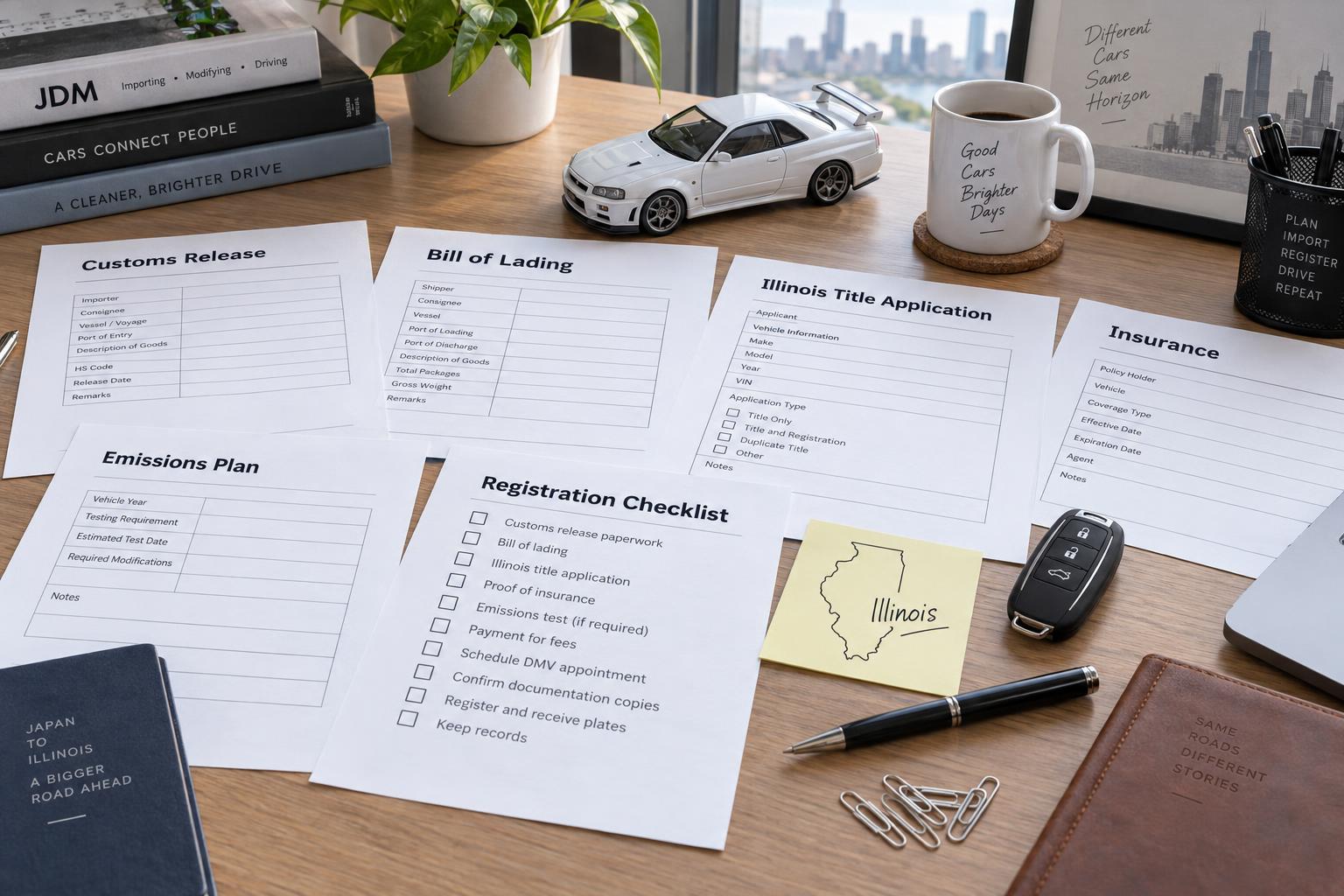
A practical Illinois JDM title packet usually includes:
- Completed Application for Vehicle Transaction(s), VSD 190
- Japanese export certificate, deregistration document, or other foreign ownership document
- English translation for each foreign-language ownership document
- Bill of sale and invoice chain from the seller/exporter to the Illinois applicant
- Bill of lading and arrival documents
- CBP Form 7501 Entry Summary
- DOT Form HS-7 showing the federal import basis, or other federal safety exemption support
- EPA Form 3520-1 showing the applicable emissions exemption, or other EPA support
- CBP release/payment backup where available
- RUT-25 or RUT-50 tax form, depending on seller type
- Illinois insurance for registration
- Odometer/kilometer handling where applicable
- Emissions plan if the vehicle will be registered in an Illinois testing area
- Plate choice: standard, antique, or expanded-use antique where eligible
The exact file can vary by vehicle, seller, model year, fuel type, ownership chain, county, use, and how the facility or remittance agent handles the application.
Original foreign ownership documents and translations matter
Illinois administrative guidance says a foreign ownership document is required and must be in English or accompanied by an English translation. For a JDM import, that usually means preserving the Japanese export certificate or deregistration document and getting a usable translation.
Do not treat the auction sheet as a substitute for ownership paperwork. Auction sheets can support the file, but they are not the same thing as original ownership evidence.
Also make the chassis number trail boring. Many Japanese-market vehicles do not have a 17-digit U.S.-style VIN. They may use chassis numbers such as BNR32-012345, JZX100-0000000, KZH106-0000000, or JA11-123456.
Before the vehicle ships, compare the chassis number across:
- Japanese export certificate or deregistration document
- English translation
- Bill of sale
- Exporter invoice
- Auction invoice or auction sheet, if available
- Bill of lading
- CBP Form 7501
- DOT HS-7
- EPA 3520-1
- VSD 190
- Insurance documents
Prefixes, hyphens, zeros, and model codes matter. If one document drops the prefix and another adds a made-up VIN format, the Illinois title counter may not be thrilled to solve the mystery. Hard to blame them. Nobody signs up for chassis archaeology before lunch.
CBP Form 7501 is not optional paperwork in practice
Illinois’ imported-vehicle rules list Customs entry forms, including CBP Form 7501, as part of the title and registration document set for vehicles not originally built to federal standards. CBP also tells importers to keep the bill of lading, bill of sale, foreign registration, EPA Form 3520-1, DOT Form HS-7, and entry paperwork.
For an Illinois buyer, the Customs packet is not just a port-release file. It may also be needed for state title support.
Keep:
- CBP Form 7501 Entry Summary
- CBP release or entry backup where available
- Bill of lading
- Bill of sale or purchase invoice
- Japanese ownership/export document
- English translations
- DOT Form HS-7
- EPA Form 3520-1
- Duty/payment support where applicable
A broker worksheet or port invoice may help explain the move, but it is not the same thing as official Customs entry proof.
Illinois does not have a general passenger-car safety inspection, but identity still matters
Illinois does not run a statewide annual safety inspection program for ordinary passenger cars like some states do. That does not remove the identity issue.
The Secretary of State tells applicants to make sure the vehicle information on the title and application match and to check the VIN on the title against the number on the vehicle. Illinois’ imported-vehicle rules also focus on confirming that the vehicle seeking title is the same vehicle admitted through Customs.
For most JDM buyers, the inspection issue is less about a routine safety sticker and more about document consistency. If the chassis plate is missing, altered, damaged, or inconsistent with the import file, solve that before the title packet goes in.
Illinois emissions testing is location and model-year dependent
Illinois emissions testing is not statewide. Illinois EPA says the program is tied to the Chicago and Metro-East St. Louis areas, with registration renewal enforcement through the Secretary of State.
Illinois EPA says most 1996 and newer gasoline-powered passenger vehicles are subject to emissions inspections after they are four years old. Testing generally follows the license plate expiration month, with even model-year vehicles usually tested in even years and odd model-year vehicles in odd years.
That matters for JDM imports. A 2001 gasoline JDM car is old enough to be federally import-eligible in 2026, but it may still land in the OBD-era emissions conversation if registered in a testing area.
Before shipping, ask:
- Will the vehicle be registered in the Chicago or Metro-East emissions testing area?
- Is it gasoline, diesel, hybrid, electric, or another fuel type?
- Is the model year 1996 or newer?
- Does the vehicle have an OBD system Illinois can test?
- Is the buyer considering antique or expanded-use antique plates?
- Does the plate path match how the vehicle will actually be used?
Right-hand drive is usually not the hard part. Emissions readiness on a non-U.S.-market 1996-and-newer vehicle can be.
Antique and expanded-use antique plates are useful, but not magic
Illinois Antique Vehicle plates are for vehicles at least 25 years old. The Secretary of State says those vehicles may only be driven to and from antique auto shows or exhibitions, service stations, or demonstrations. Antique plates are valid for five years.
Illinois Expanded-Use Antique plates are for vehicles more than 25 years old. These are annual plates. Illinois says vehicles with expanded-use antique plates may be driven without standard antique restrictions from March through November. From December through February, they may only be driven to and from an antique auto show or exhibition, service station, or demonstration.
Both plate paths require the vehicle’s mechanical and physical condition, including brakes, lights, glass, and appearance, to be the same as or as safe as originally equipped.
For JDM buyers:
- Standard plates usually fit regular transportation
- Antique plates fit very limited show, service, or demonstration use
- Expanded-use antique plates may fit seasonal enthusiast use, with winter restrictions
Do not pick a plate only because it looks easier. Pick the plate that matches the real use. Illinois paperwork has enough moving parts without adding creative writing.
Insurance needs to accept the Japanese chassis number
Illinois requires liability insurance for motor vehicles that must display license plates and are being driven. The Secretary of State FAQ lists minimum liability coverage of $25,000 for injury or death of one person, $50,000 for injury or death of more than one person, and $20,000 for property damage.
For a JDM import, the practical question is whether the insurer can issue a policy using the Japanese chassis number when there is no 17-digit VIN.
Before booking transport, confirm:
- The insurer can bind coverage for the specific imported vehicle
- The policy can use the exact chassis number on the export and Customs documents
- The year, make, and model description matches the title file
- The coverage fits the intended use, especially if using antique or collector coverage
- The insurance card will not create a different VIN format from the state paperwork
Insurance formatting mistakes can poison an otherwise clean Illinois file. Small clerical problem. Large delay.
Odometer and kilometer readings should be clear
Many JDM imports show kilometers, not miles. Illinois title guidance tells applicants to include the current odometer reading, and older vehicles may have odometer disclosure exemptions depending on age and transaction facts.
Keep the original reading clear. If a document shows kilometers, say kilometers. If a buyer record includes a mile conversion, label it as a conversion. Do not casually turn kilometers into miles on one form and leave kilometers on another.
A clean file should show:
- Original reading as displayed
- Whether the reading is kilometers or miles
- Any conversion used for buyer records
- Whether an odometer disclosure exemption applies because of age
The goal is simple: do not make the clerk wonder whether the car has an odometer discrepancy or a unit conversion.
Taxes and fees are separate from Customs duty
A JDM buyer may pay Customs duty at the port and still owe Illinois tax, title, registration, and plate fees.
The Illinois Secretary of State FAQ lists a standard vehicle title fee of $165 and a standard registration/license plate fee of $151, for a standard title and registration total of $316. Fees can change, and special plates can have different charges.
Illinois tax handling depends on the purchase facts and the proper RUT form. Keep value support ready:
- Purchase invoice
- Bill of sale
- Auction invoice or auction sheet, if available
- Exporter invoice
- Payment proof, if available
- CBP entry value
- Freight and landed-cost backup
- English translation for any value document written only in Japanese
Customs duty and Illinois tax are different buckets. Same wallet, different government window.
Kei trucks, vans, and small JDM vehicles need extra checking
Illinois does not have one simple kei rule that makes every case easy. A kei truck, kei van, or kei car still needs the same title foundation: federal eligibility, CBP entry proof, original ownership documents, translations, tax forms, insurance, and a registration/plate path that fits actual road use.
Before shipping a kei vehicle to Illinois, confirm:
- The chassis number appears consistently across all documents
- The vehicle type on the export certificate and bill of sale is clear
- The insurer will cover the vehicle for the intended use
- The plate path fits how the buyer plans to drive it
- Emissions handling is checked if it is 1996 or newer and registered in a testing area
- Any off-road-only, farm-use, local-use, or limited-use assumption has been confirmed with Illinois authorities
Forum advice is useful for spotting questions. It is not a title plan.
Practical Illinois checklist before the vehicle ships
Before booking ocean transport to Illinois, confirm:
- Federal import eligibility and EPA/DOT exemption basis
- Japanese export or ownership document availability
- English translations
- Bill of sale and ownership chain
- Chassis-number consistency across every document
- Customs broker plan and CBP Form 7501 availability after entry
- Illinois VSD 190 title/registration packet expectations
- RUT-25 or RUT-50 tax path
- Illinois insurance using the Japanese chassis number where needed
- Emissions path if the buyer is in a testing area
- Plate path based on real use
- Title, registration, tax, plate, and special-plate fee budget
- Inland delivery timing after Customs release
Bottom line
Illinois can work for a 25-year-old JDM import, but it is paperwork-sensitive. The big issues are original foreign ownership documents, English translations, CBP Form 7501, VSD 190, RUT tax paperwork, insurance, consistent chassis-number formatting, emissions planning in the Chicago or Metro-East testing areas, and an honest plate decision.
TGAL can help plan the shipping side so the ocean move, Customs release, and inland transport do not fight the Illinois registration timeline. AWIS can help with Customs clearance and import-entry planning. The buyer still needs to confirm title, registration, insurance, emissions, tax, inspection, and plate requirements directly with the Illinois Secretary of State, Illinois Department of Revenue, Illinois EPA/Air Team where relevant, county/local authorities when applicable, and the insurer before purchase or shipment.
This article is general information, not legal advice. Illinois Secretary of State, tax, emissions, insurance, county, and plate rules can change, and handling can depend on model year, fuel type, vehicle classification, ownership documents, county, facility, insurance carrier, and intended use. Confirm current requirements with state/county authorities before booking transport or making purchase decisions.
Sources reviewed
- Illinois Secretary of State, Grey Market Vehicles
- Illinois Secretary of State, Apply for Registration and Title
- Illinois Administrative Code, Title 92, Section 1010.140, Documents Required to Title and Register Imported Vehicles Not Manufactured in Conformity with Federal Emission or Safety Standards
- Illinois Secretary of State, Antique License Plates
- Illinois Secretary of State, Expanded-Use Antique License Plates
- Illinois EPA, Vehicle Emissions Testing Program
- Illinois Secretary of State, Vehicle Services FAQ, title/registration fees and mandatory insurance
- U.S. Customs and Border Protection, Importing a Motor Vehicle
- NHTSA import eligibility guidance and DOT Form HS-7
- EPA Form 3520-1 vehicle import guidance
Aldo Flores
Founder & CEO, Trans Global Auto Logistics
Licensed NVOCC • FMC Regulated • 30+ Years in International Vehicle Logistics
Aldo Flores is the CEO of Trans Global Auto Logistics, a licensed NVOCC and FMC-regulated freight forwarder based in Arlington, Texas. With 23 years at TGAL and a lifetime in the family business, Aldo has overseen the shipping of more than 100,000 vehicles worldwide — from military PCS moves and classic cars to commercial fleet exports and boat shipments. TGAL was founded by his mother over 25 years ago, and under Aldo's leadership it has grown into one of the most trusted names in overseas vehicle transport.