Published: August 7, 2026
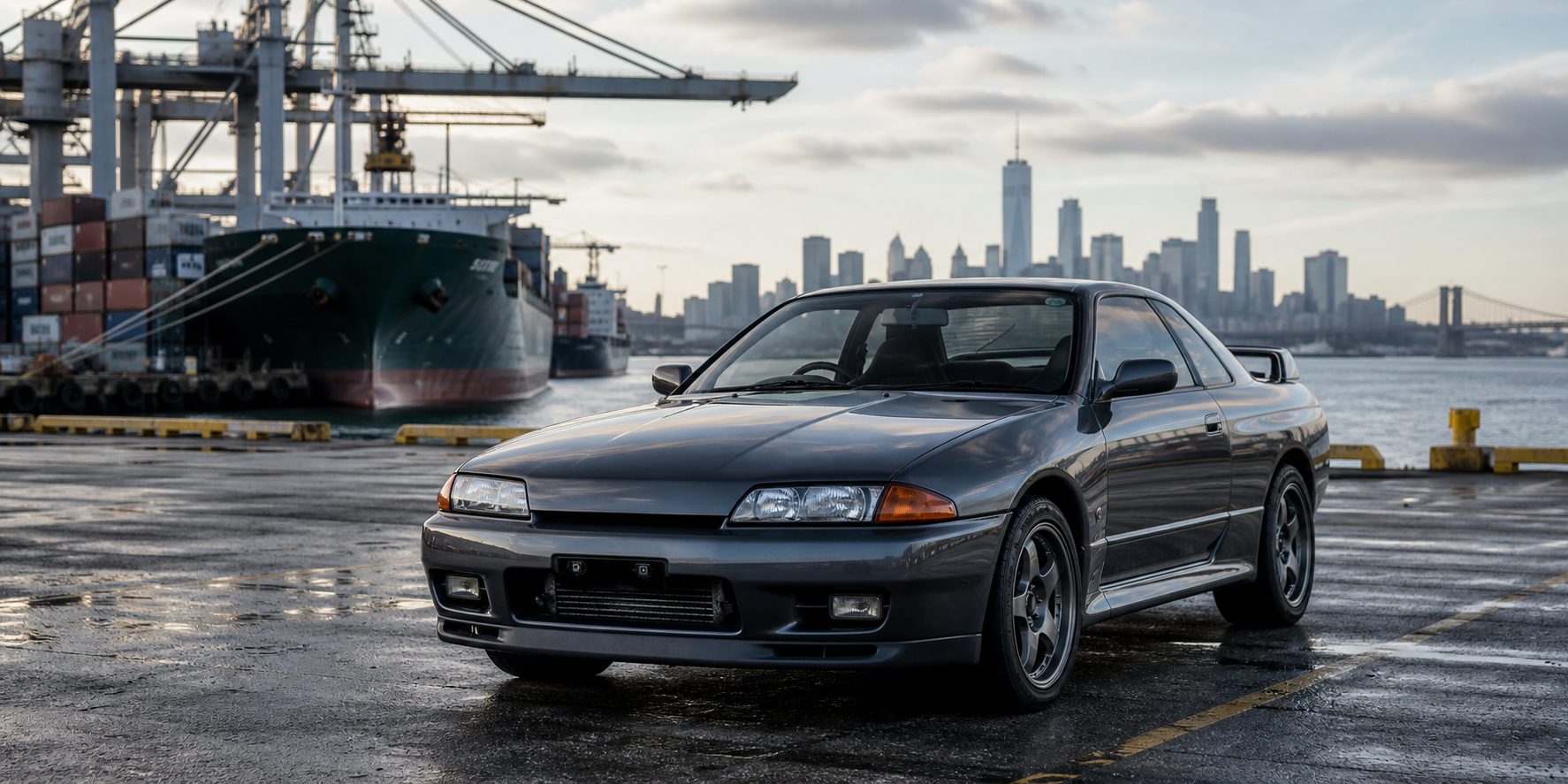
New York is a serious JDM destination: New York City, Long Island, Westchester, the Hudson Valley, Albany, Buffalo, Rochester, and Syracuse all have buyers looking at Skylines, Supras, Land Cruisers, Delicas, Pajeros, kei trucks, and other right-hand-drive imports.
New York can work for federally legal 25-year-old JDM imports, but it is not a casual paperwork state. The mistake is assuming that a vehicle clearing Customs means it is ready for New York title, registration, inspection, plates, and legal road use.
TGAL handles the international vehicle shipping side: Japan-origin pickup coordination, ocean transport, arrival timing, port release coordination, and inland transport after Customs release. For a New York buyer, the registration plan needs to be built before booking ocean freight, not after the car is sitting at a terminal with storage charges doing their usual little dance.
Federal import clearance is only the first gate
A JDM vehicle that is at least 25 years old may qualify for the federal NHTSA exemption from current Federal Motor Vehicle Safety Standards. CBP still expects the import file to support the entry. CBP’s vehicle import guidance lists documents such as the bill of lading, bill of sale, foreign registration, EPA Form 3520-1, and DOT Form HS-7.
New York title and registration is a separate state process.
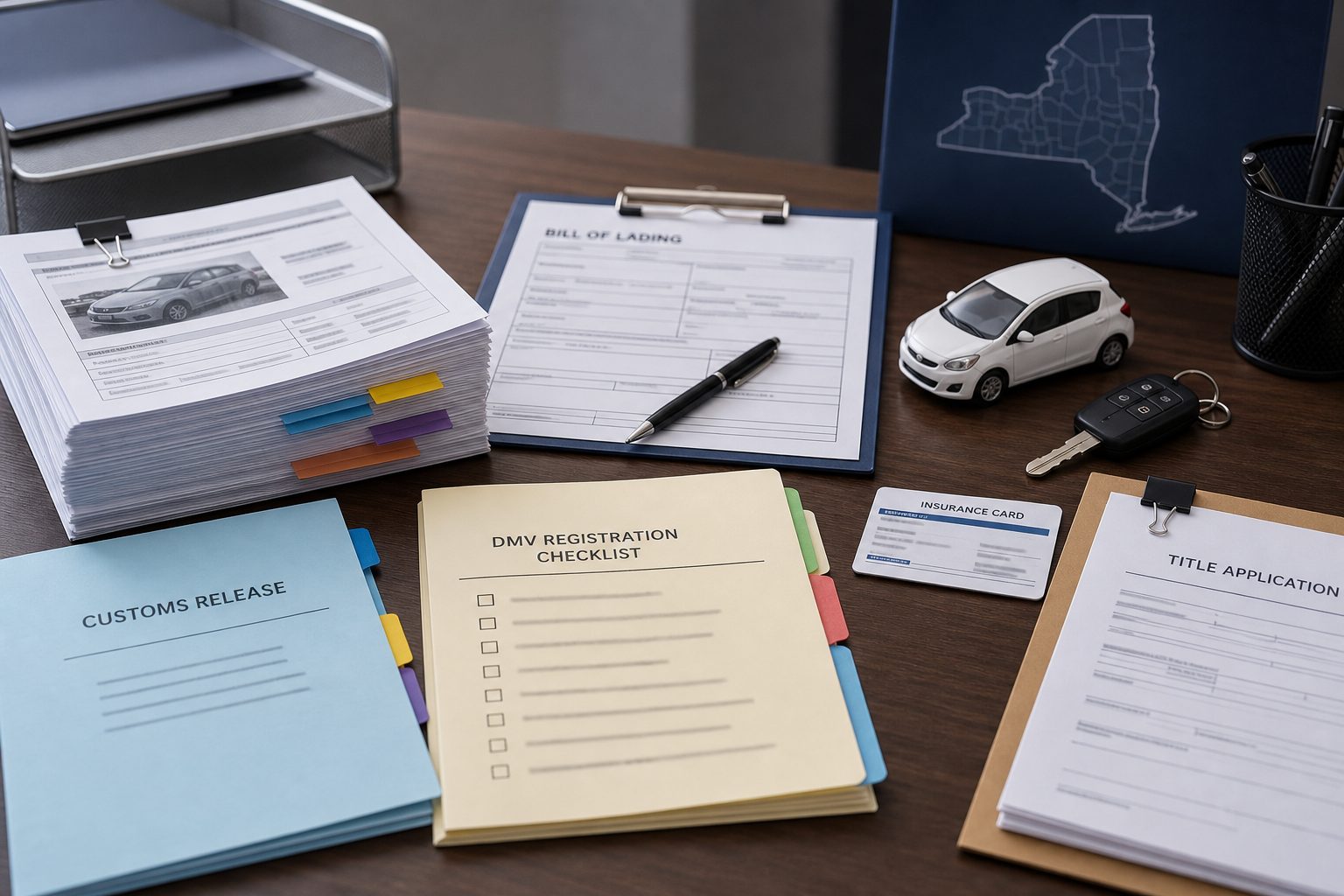
New York DMV says imported vehicles must clear U.S. Customs and Border Protection and comply with New York safety and emissions standards. DMV can still require the vehicle to meet New York minimum safety and emissions standards even if the vehicle meets, or is exempt from, federal safety and emissions standards.
That is the key point: federal eligibility gets the vehicle into the country. It does not automatically produce a New York title, registration sticker, inspection sticker, or plate.
If you need help with Customs clearance or import-entry planning, AWIS covers that side here: https://awis.us/jdm-registration-new-york-imported-vehicles/
Build the New York DMV packet before the vessel sails
For a New York-bound JDM import, start the title file before the vehicle leaves Japan. The same identity details used for shipping and Customs need to line up with the DMV packet.
A practical New York file should include:
- New York Vehicle Registration/Title Application, MV-82
- Proof of identity and date of birth
- Proof of New York insurance
- Japanese export certificate or other foreign ownership document
- Certified English translation for any non-English document
- Purchase invoice or bill of sale
- Bill of lading
- CBP Form 7501 Entry Summary, if used for the entry
- Any accepted CBP import document that applies to the vehicle
- EPA Form 3520-1
- DOT Form HS-7
- Sales tax form, usually DTF-802, DTF-803, or DTF-804 depending on the transaction
- Payment for title, registration, plates, taxes, and county use taxes where applicable
New York DMV lists several Customs documents it may accept for imported vehicles, including CBP Form 7501, CBP Form 7523, CBP Form 3299, CBP Form 3311, CBP Form 368, and CBP Form 6059B. Which form belongs in the file depends on how the vehicle was entered.
For a normal commercial JDM import, preserve the official entry documents. A broker worksheet or email summary is not the same thing as a DMV-recognized Customs document.
Certified English translations are not optional
New York DMV says any document printed in a language other than English must have a certified English translation.
That matters because the Japanese export certificate is often the core ownership document. Do not wait until the DMV appointment to translate it.
The translation should clearly preserve:
- Make
- Model
- Model year or manufacture-date information shown on the source document
- Chassis number
- Owner or exporter name
- Export or deregistration details
A weak translation can slow down a clean import. If the translation drops the chassis number, changes the model code, or fails to connect the Japanese document to the exact car being titled, New York DMV is unlikely to guess its way through the file.
Chassis number consistency is boring and expensive when ignored
Many older JDM vehicles do not have a U.S.-style 17-digit VIN. They often use a shorter Japanese chassis number. That is common. The risk is inconsistency.
Before booking ocean transport, compare the chassis number across:
- Japanese export certificate
- Certified English translation
- Purchase invoice or bill of sale
- Auction sheet, if available
- Bill of lading instructions
- CBP entry documents
- EPA Form 3520-1
- DOT Form HS-7
- New York MV-82
- Insurance documents
If one document includes a hyphen, another removes it, and another drops a prefix, fix it before the vehicle ships. A legal import can still get stuck because the paperwork makes the same car look like three different cars. International logistics: where punctuation can cost money.
Shipping timing: ocean freight, Customs release, inland delivery, then DMV
A clean New York JDM import plan usually follows this order:
- Confirm the vehicle is federally eligible and New York registration appears workable before purchase or booking.
- Collect ownership documents, certified translations, chassis photos, invoices, and value support.
- Book ocean transport only after the vehicle identity and import basis are clear.
- Prepare Customs entry documents before the vessel arrives.
- Clear CBP and save the official entry and release documents.
- Release the vehicle from the port, terminal, CFS, or bonded location.
- Arrange inland transport to New York, a shop, inspection station, storage location, or buyer address.
- Complete New York title, insurance, tax, registration, inspection, emissions, and plate steps.
The weak spot is the gap between Customs release and New York road use. The car may be released from the port and still not be legal to drive.
Plan inland transport accordingly. Do not build the schedule around driving the vehicle home from the terminal unless the registration and inspection path is already handled.
New York has a direct Kei-class warning
New York DMV’s imported-vehicle page includes a specific warning: DMV will not register or title any Kei-class vehicle unless the applicant provides proof that the vehicle has been brought into compliance with all applicable FMVSS and EPA emission requirements in effect when the vehicle was manufactured by the original manufacturer.
That is a major caveat for kei trucks, kei vans, and kei cars.
Do not assume New York treats every 25-year-old Japanese-market vehicle the same way. The federal 25-year import rule and New York’s title position are separate issues.
If the vehicle is kei-class, confirm the New York DMV path before purchase, before booking ocean freight, and before promising anyone the vehicle can be titled in New York. Cheap auction buys have a funny way of becoming expensive lawn ornaments.
New York safety inspection is required
New York has a statewide inspection program. DMV says vehicles must be inspected every 12 months and when ownership is transferred. A valid inspection sticker must be displayed on the vehicle.
For a newly registered vehicle purchased from someone other than a New York DMV-registered dealer, DMV says the buyer receives a 10-day inspection extension from the registration date. An inspection issued to the previous registrant is not valid.
For a JDM import, plan the inspection before the vehicle lands if possible. The inspection station may look at normal safety items such as:
- Brakes
- Steering and suspension
- Tires
- Lights and reflectors
- Glass
- Wipers
- Mirrors
- Seat belts
- Exhaust condition
- Other required equipment
This is not a Customs issue. Customs release does not make a vehicle roadworthy under New York inspection rules.
Emissions depends on age, fuel type, and plate path
New York inspections often include emissions, but many 25-year-old imports have an age-based advantage.
New York DMV says vehicles are exempt from emissions inspection if they are more than 25 model years old. DMV also lists an emissions exemption for vehicles issued historical plates.
That does not remove the safety inspection requirement for normal registration. It also does not mean every imported vehicle avoids every inspection problem. Fuel type, vehicle type, weight, model year, equipment condition, and DMV records can still matter.
For many federally legal 25-year-old gasoline JDM passenger vehicles, emissions may not be the main obstacle in New York. Title documents, certified translations, chassis-number consistency, insurance, sales tax, and safety inspection planning are often the bigger headaches.
Historical plates are available, but not for daily driving
New York offers historical plates for vehicles manufactured more than 25 years before the current calendar year. DMV says the manufacture date is based on model year.
Historical plates are not daily-driver plates.
New York DMV says a vehicle with historical plates can be used only as a collector’s item or exhibition piece, not for daily transportation. Historical plate registration is valid for one year, and the vehicle needs special insurance. DMV says the insurance ID card must show the word “HISTORICAL.” “Antique” or “classic” wording is not enough.
For weekend events, shows, occasional drives, and collector ownership, historical plates may fit.
For someone who wants to commute in a Skyline, daily-drive a Land Cruiser, or use a Delica as family transportation, standard registration is usually the cleaner path. Pick the plate type that matches real use.
Sales tax and county use tax can still apply
New York DMV says that when a vehicle is registered at a DMV office, the applicant must pay sales tax, prove sales tax was paid, or prove the registration is exempt from sales tax. County use tax may also be due.
For private sales, New York generally uses Statement of Transaction DTF-802, and DMV calculates and collects sales tax. DTF-803 or DTF-804 may apply if the buyer claims an exemption or credit for tax paid elsewhere.
For JDM imports, bring value support:
- Purchase invoice
- Bill of sale
- Auction invoice or auction sheet if available
- Payment records if needed
- Certified translation if value documents are not in English
- Freight or landed-cost documents if DMV asks for context
Do not expect the DMV counter to decode auction grades, chassis codes, and trim packages from a vague foreign invoice. That is not one of the listed New York superpowers.
What New York buyers should confirm before booking ocean transport
Before the vehicle is loaded overseas, confirm:
- The vehicle is federally eligible under the 25-year rule or another valid import path
- New York DMV imported-vehicle requirements are understood before arrival
- The vehicle is not kei-class, or the New York title path has been confirmed directly
- The Japanese export certificate is available
- Certified English translations are ready or scheduled
- The ownership chain connects the seller/exporter to the New York buyer
- The chassis number is readable on the vehicle
- The same chassis number format will be used on shipping, Customs, insurance, and DMV documents
- The bill of lading will show the correct vehicle details
- The Customs broker has the documents needed for entry
- Safety inspection repairs are planned if needed
- Emissions status is clear for the model year, fuel type, and plate path
- Standard or historical plate use matches how the owner will actually drive the vehicle
- Sales tax and county use tax support is ready
- Inland transport does not assume the vehicle can be driven immediately after Customs release
That last point matters. The vehicle may need to move from the port to New York by carrier before it can legally be driven.
Bottom line for New York JDM imports
New York can work for many 25-year-old JDM imports, but it rewards clean paperwork and punishes assumptions.
TGAL can help with international vehicle shipping, ocean freight, arrival coordination, port release timing, and inland transport. For Customs clearance and import-entry help, AWIS can handle that side: https://awis.us/jdm-registration-new-york-imported-vehicles/
For New York title, registration, safety inspection, emissions, tax, insurance, and plate decisions, confirm requirements directly with New York DMV and the appropriate county DMV office before purchase or arrival.
State DMV rules can change, local practices can vary, and requirements may depend on model year, vehicle classification, owner status, fuel type, county/locality, documentation, and intended use. This article is general information, not legal advice. Confirm the current requirements with state and county authorities before buying or shipping the vehicle.
Sources reviewed
- New York DMV, Register an Imported Vehicle: https://dmv.ny.gov/registration/register-an-imported-vehicle
- New York DMV, About New York State Inspections: https://dmv.ny.gov/inspections/about-new-york-state-inspections
- New York DMV, New York State Vehicle Safety/Emissions Inspection Program: https://dmv.ny.gov/new-york-state-vehicle-safetyemissions-inspection-program
- New York DMV, Historical and Vintage Plates: https://dmv.ny.gov/plates/historical-and-vintage-plates
- New York DMV, Sales Tax Information: https://dmv.ny.gov/registration/sales-tax-information
- New York DMV, MV-82 Vehicle Registration/Title Application: https://dmv.ny.gov/forms/mv82.pdf
- New York Tax Department / DMV, DTF-802 Statement of Transaction: https://www.tax.ny.gov/pdf/current_forms/st/dtf802.pdf
- U.S. Customs and Border Protection, Importing a Motor Vehicle: https://www.cbp.gov/trade/basic-import-export/importing-car
- U.S. EPA, Publications and Forms for Importing Vehicles and Engines: https://www.epa.gov/importing-vehicles-and-engines/publications-and-forms-importing-vehicles-and-engines
- NHTSA, Importation and Certification FAQs: https://www.nhtsa.gov/importing-vehicle/importation-and-certification-faqs
Aldo Flores
Founder & CEO, Trans Global Auto Logistics
Licensed NVOCC • FMC Regulated • 30+ Years in International Vehicle Logistics
Aldo Flores is the CEO of Trans Global Auto Logistics, a licensed NVOCC and FMC-regulated freight forwarder based in Arlington, Texas. With 23 years at TGAL and a lifetime in the family business, Aldo has overseen the shipping of more than 100,000 vehicles worldwide — from military PCS moves and classic cars to commercial fleet exports and boat shipments. TGAL was founded by his mother over 25 years ago, and under Aldo's leadership it has grown into one of the most trusted names in overseas vehicle transport.