Published: July 14, 2026
Updated July 14, 2026
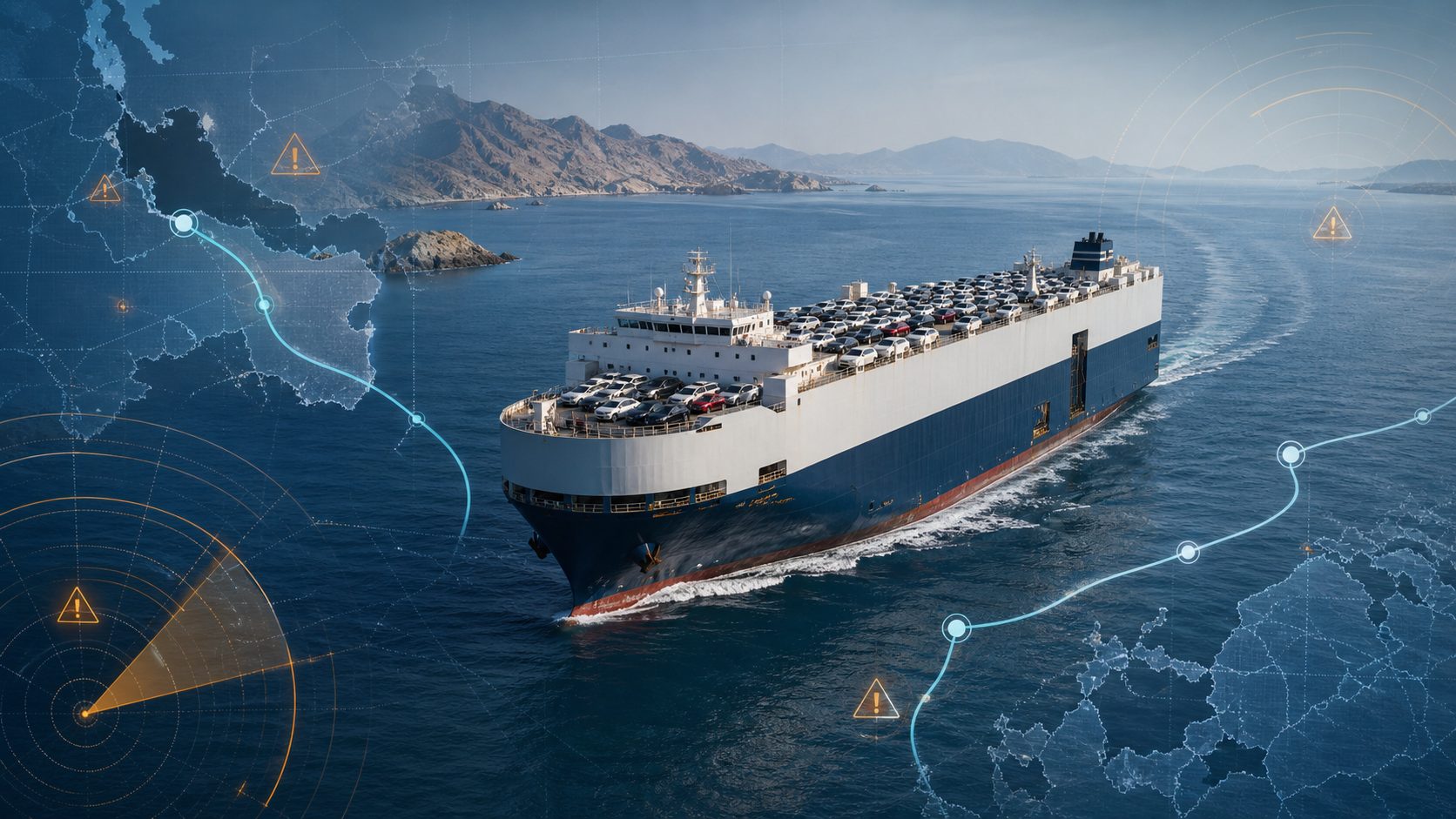
The Strait of Hormuz is still a live shipping risk this week. That does not mean every vehicle shipment is delayed, and it does not mean every route touches the Gulf. It does mean exporters should treat Middle East, Gulf, and South Asia routings with more caution than normal.
For vehicle exporters, the practical issue is not the headline. It is whether the carrier will accept the booking, whether the sailing will hold, whether insurance terms change, and whether the customer understands that an ETA is an estimate until the vehicle clears each milestone.
TGAL is reviewing affected lanes by port, carrier, cargo type, documentation status, and current vessel guidance before giving customers firm booking direction.
What changed this week
As of Tuesday afternoon, July 14, reporting and industry advisories still point to a high-risk operating environment in and around the Strait of Hormuz.
Insurance Journal, citing Bloomberg reporting, reported on July 14 that two United Arab Emirates-linked supertankers were attacked while sailing through Hormuz with transponders turned off. Adnoc L&S said one seafarer died and several were injured. The same report said visible transits had dropped sharply over the prior few days and that some shipowners were pausing transit plans.
The International Maritime Organization’s July 13 Council statement condemned attacks on civilian commercial ships in and around the Strait of Hormuz and called for de-escalation. IMO also said transit passage through straits used for international navigation should not be threatened, impeded, denied, hampered, impaired, or suspended.
Inchcape Shipping Services’ July 13 Middle East operational update said the situation remains fluid and may change at short notice. UAE ports listed in the update were generally operating, but Fujairah and Khor Fakkan had an estimated minimum four-week berthing wait for breakbulk, bulk, general cargo, and RoRo vessels because of increased cargo calls and rerouting. Inchcape also noted vessel movement restrictions at Shuaiba Port in Kuwait and temporary controls around some maritime activity in Qatar, while commercial vessel traffic and port operations there were reported unaffected.
The U.S. Energy Information Administration has reported that oil flows through Hormuz averaged about 20 million barrels per day in 2024, roughly one-fifth of global petroleum liquids consumption. Even when a vehicle is not moving on an oil tanker, risk around that chokepoint can affect bunker costs, war-risk insurance, vessel deployment, port calls, and carrier appetite.
Why vehicle exporters should care
Vehicle exporters can get caught by the ripple effects even when the car, truck, RV, boat, or equipment shipment is not physically transiting Hormuz.
The exposure usually shows up in five places:
- Carrier acceptance: RoRo and container carriers may pause or limit certain bookings near affected ports.
- Schedule reliability: Vessel rotations, transshipment plans, and port calls can change with little notice.
- Insurance review: War-risk terms, cargo insurance conditions, and carrier surcharges can shift before sailing.
- Port congestion: Rerouted vessels and bunching can create berth delays, especially at regional hubs.
- Customer expectations: Buyers and receivers may hear the headline and assume either total shutdown or no risk at all. Neither is safe planning.
The job is to separate direct route exposure from general market noise.
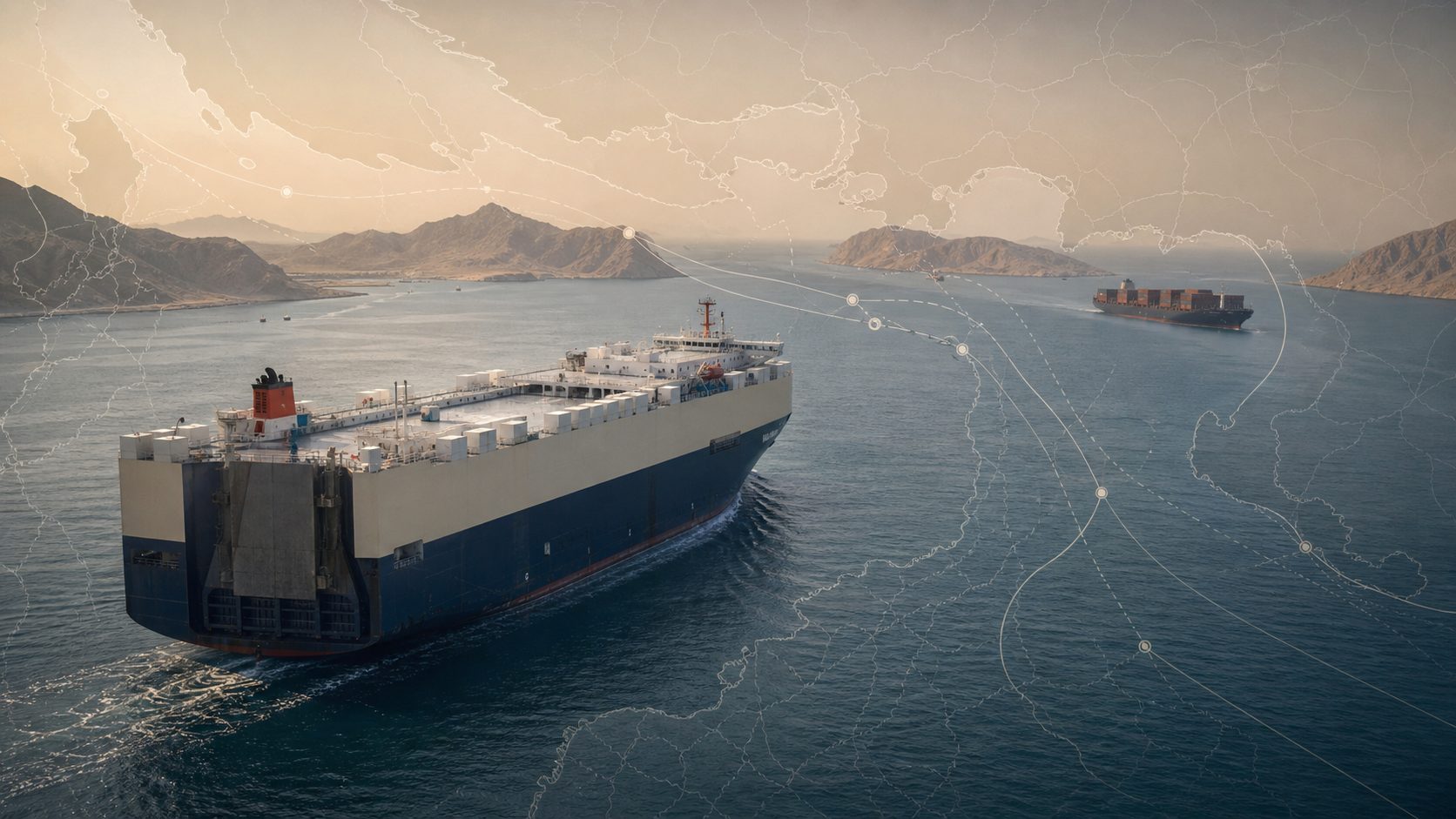
Which vehicle shipments are most exposed?
The higher-risk shipments are generally tied to:
- Persian Gulf origins or destinations
- Middle East ports that rely on Hormuz-adjacent routing
- South Asia or Indian Ocean routings affected by vessel redeployment
- Containerized vehicle shipments using regional transshipment hubs
- RoRo shipments calling congested Gulf or nearby ports
- High-value, oversized, non-running, modified, or specialty vehicles where rebooking is harder
- Shipments where the buyer is working from a fixed delivery date instead of a realistic arrival window
A U.S. export to Europe may have little direct exposure. A vehicle moving into a Gulf destination, or through a regional hub that carriers are actively reviewing, is a different conversation.
RoRo and container bookings may be affected differently
RoRo is often the cleanest fit for running vehicles, heavy trucks, RVs, trailers, and equipment. But RoRo schedules depend on port rotations and berth availability. If a carrier changes calls or a port backs up, the exporter may have fewer backup sailings than they expect.
Containerized vehicle shipping can offer more routing options, but it is not immune. Container lines can omit ports, roll cargo, change transshipment hubs, add emergency charges, or require updated acceptance before sailing.
Neither mode is automatically safer. The right answer depends on the unit, the lane, the port, the carrier, and the customer’s timing tolerance.
Insurance and surcharge language matters
Exporters should not assume the quoted price is locked if the carrier has not accepted the booking or if the shipment is still waiting on documentation.
Ask these questions before promising a customer a final number:
- Does this quote include known carrier surcharges as of today?
- Is the carrier still reviewing war-risk or security-related charges for the lane?
- Does cargo insurance exclude or limit war, strikes, riots, civil commotion, seizure, or hostile acts?
- If a carrier adds a surcharge before sailing, who approves the revised cost?
- Is the ETA tied to an actual confirmed vessel or only a planned sailing?
This is where vague language burns people. If the carrier has not confirmed it, do not present it as fixed.
What to tell customers this week
The best customer message is clear and boring. No panic, no false certainty.
Tell customers:
- The route is being reviewed for direct or indirect Hormuz exposure.
- Carrier schedules may change with limited notice on affected lanes.
- ETAs are planning estimates, not delivery guarantees.
- Insurance and risk-related surcharges may require carrier confirmation.
- Documents should be complete before pickup or port delivery.
- Flexible delivery planning is safer than building travel, resale, or project deadlines around the earliest arrival date.
For exporters selling vehicles overseas, this also protects the buyer relationship. A buyer can handle uncertainty better when it is explained before the vehicle is at port.
What TGAL is doing
TGAL is checking affected shipments by:
- Origin, destination, and actual port routing
- RoRo vs container fit
- Carrier acceptance and current sailing status
- War-risk, insurance, and surcharge exposure
- Documentation readiness before port cutoff
- Destination agent and customs handling risk
- Whether the customer needs a fixed arrival plan or a realistic window
We will not guess ETAs to make a shipment sound cleaner than it is. If a carrier changes a sailing, omits a port, pauses a lane, or adds a charge, the customer needs to know quickly and plainly.
The takeaway for exporters
If your vehicle shipment has Middle East, Gulf, or South Asia exposure, treat the booking as route-sensitive this week. Confirm the carrier position before quoting firm timing. Confirm insurance terms before assuming the risk is covered. Keep documents clean before the vehicle moves.
And if the lane does not touch the region, say that too. Not every international vehicle shipment is a Hormuz problem. But the ones that are should be handled like live cargo planning, not a copy-paste ETA from last month.
TGAL helps exporters, dealers, military families, and individual shippers move vehicles internationally with carrier coordination and realistic planning. If you are unsure whether your route is exposed to current Hormuz-related disruption, contact TGAL before booking.
Sources reviewed July 14, 2026
- International Maritime Organization: Shipping and seafarer information — Strait of Hormuz and the Middle East
- International Maritime Organization, July 13, 2026: IMO Council reaffirms commitment to protecting vital shipping lanes
- Inchcape Shipping Services, updated July 13, 2026: Middle East Operational Status
- U.S. Energy Information Administration: Amid regional conflict, the Strait of Hormuz remains critical oil chokepoint
- Insurance Journal / Bloomberg, July 14, 2026: UAE Oil Tankers Attacked While Sailing Dark Through Hormuz
- CNBC, July 7, 2026: Strait of Hormuz threat level raised to severe after Iran attacks tankers using U.S. Navy route
Aldo Flores
Founder & CEO, Trans Global Auto Logistics
Licensed NVOCC • FMC Regulated • 30+ Years in International Vehicle Logistics
Aldo Flores is the CEO of Trans Global Auto Logistics, a licensed NVOCC and FMC-regulated freight forwarder based in Arlington, Texas. With 23 years at TGAL and a lifetime in the family business, Aldo has overseen the shipping of more than 100,000 vehicles worldwide — from military PCS moves and classic cars to commercial fleet exports and boat shipments. TGAL was founded by his mother over 25 years ago, and under Aldo's leadership it has grown into one of the most trusted names in overseas vehicle transport.