Last Updated: June 24, 2026 | Originally Published: April 8, 2026
Two Chokepoints at Risk: What Happens If Houthis Close Bab el-Mandeb
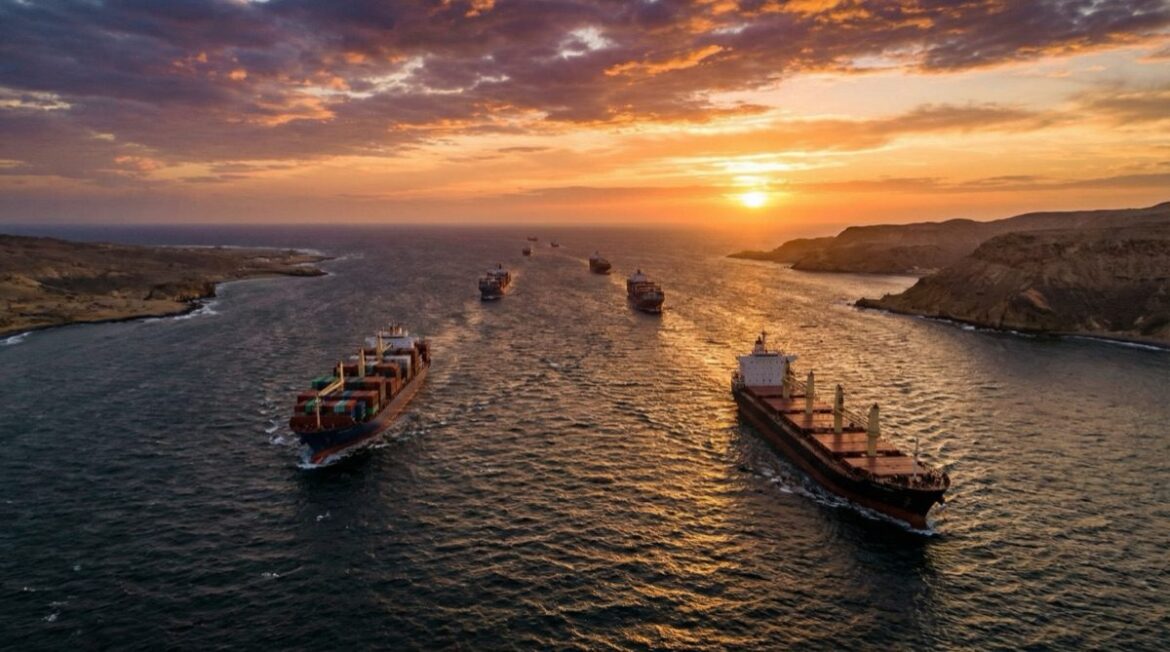
The Strait of Hormuz has been closed since February 28, 2026. Now Iran is pushing Houthis in Yemen to prepare a renewed campaign targeting Bab el-Mandeb, the 18-mile-wide strait at the southern entrance to the Red Sea.
If Bab el-Mandeb closes, Suez Canal access goes with it. That’s not a second problem — it’s the same problem doubling in size.
The Chokepoint Map
Global shipping runs through a handful of narrow passages. Right now, two of the three most important ones are under threat simultaneously:
Strait of Hormuz — closed since February 28, 2026. Connects the Persian Gulf to the Gulf of Oman. The IRGC formally banned allied shipping on March 27.
Bab el-Mandeb — currently open but under active threat. Connects the Red Sea to the Gulf of Aden. Any vessel heading to or from the Suez Canal must pass through it.
Strait of Malacca — open. Connects the Indian Ocean to the South China Sea. No current threats.
When Hormuz closed, Suez became the alternative for vessels rerouting around the Persian Gulf. If Bab el-Mandeb closes too, that alternative disappears.
What the Houthis Can Do
Houthis have demonstrated they can seriously disrupt shipping without physically blocking a strait. Their arsenal includes anti-ship missiles, drones, and small boat attacks. During their 2023-2024 Red Sea campaign, they forced a significant portion of container shipping off the Suez route entirely. Insurance premiums spiked. Major carriers diverted around Africa.
The current situation is different in one key way: last time, Hormuz was open. This time, shippers have no good alternative if Bab el-Mandeb is compromised.
About 30 tankers are currently near Yanbu, Saudi Arabia, within range of Houthi strike capability. A European Red Sea naval task force is positioned in the region, but its mandate is to escort and defend, not to eliminate the threat on land. That’s a harder problem.
The Worst-Case Scenario
If both Hormuz and Bab el-Mandeb are compromised, all Europe-Asia maritime traffic routes around the Cape of Good Hope. That’s the southern tip of Africa — adding 10 to 14 days each way compared to the Suez route, and longer still compared to routes that used to transit Hormuz.
For fuel costs, voyage frequency, and freight rates, the math gets bad quickly. Vessels make fewer trips per year. Per-unit freight costs climb. Shippers either absorb the cost or pass it to customers.
What This Means for Vehicle Shipping
Vehicle shipping from the US to Europe runs primarily through the North Atlantic — RoRo vessels operating on routes that don’t touch either chokepoint directly. Those routes are currently open and operating.
The indirect effects, though, are real:
Insurance premiums are rising. War risk surcharges apply to any vessel operating near conflict zones. As the threat map expands, carriers are repricing policies across more of their fleets.
Transit times are extending. For shipments involving Middle East origins or destinations, the lack of viable routing options is creating real delays. There’s no clean path through this region right now.
Capacity is tighter. Ships that can’t operate in their usual trades don’t disappear — they compete for capacity on other routes. Atlantic RoRo lanes are absorbing vessels displaced from Asia and Middle East runs.
Fuel surcharges will keep climbing. Diesel at $5.38 per gallon is already factoring into carrier surcharge schedules. Any further disruption to oil transit pushes that higher.
If You’re Shipping to the Middle East
Be direct with your freight forwarder or carrier about current routing capabilities. Ask specifically about the ports at your destination and what backup options exist if the primary route is disrupted. If you’re shipping high-value vehicles to Gulf states, document your insurance coverage carefully — standard policies may not cover losses in designated war risk zones without an endorsement.
For military customers with PCS orders to Middle East-based installations, work with your shipping office early. Timelines on vehicles going to OCONUS locations in that region are less predictable than normal.
What We’re Tracking
The situation changes week to week. We’re watching:
- Houthi attack frequency and escalation signals
- US and European naval response posture
- Carrier war risk surcharge updates
- Port capacity at Red Sea access points (Jeddah, Aqaba, Djibouti)
If you have a shipment planned and you’re not sure how current events affect your route, call us before you book. Routing decisions that made sense six months ago may need to be revisited.
Plan Ahead. Book Early.
Transglobal Auto Logistics handles vehicle shipping for military PCS moves, international dealers, and private customers. We know which routes are viable and how to protect your shipment when conditions change.
Call us: (972) 602-1670
Get a quote: tgal.us
Aldo Flores
Founder & CEO, Trans Global Auto Logistics
Licensed NVOCC • FMC Regulated • 30+ Years in International Vehicle Logistics
Aldo Flores is the CEO of Trans Global Auto Logistics, a licensed NVOCC and FMC-regulated freight forwarder based in Arlington, Texas. With 23 years at TGAL and a lifetime in the family business, Aldo has overseen the shipping of more than 100,000 vehicles worldwide — from military PCS moves and classic cars to commercial fleet exports and boat shipments. TGAL was founded by his mother over 25 years ago, and under Aldo's leadership it has grown into one of the most trusted names in overseas vehicle transport.